RACA
—
—
Rock Art Center Addition
Floating Study Model Addition

Rock Art Center Addition

Study model of a floating RACA gallery mass floating above the existing visitor center with a skin made of shifting symbolsStudy model of a floating RACA gallery mass floating above the existing visitor center with a skin made of shifting symbolsStudy model of a floating RACA gallery mass floating above the existing visitor center with a skin made of shifting symbolsStudy model of a floating RACA gallery mass floating above the existing visitor center with a skin made of shifting symbols

RELATED RESEARCH IMAGES

RELATED PROJECT IMAGES

Perspective of the front entry to the RACA gallery at night showing the upper viewing deck and the structural logicPerspective of the front entry to the RACA gallery at night showing the upper viewing deck and the structural logicPerspective of the front entry to the RACA gallery at night showing the upper viewing deck and the structural logicPerspective of the front entry to the RACA gallery at night showing the upper viewing deck and the structural logic
Series of study sketches of a RACA gallery that slopes toward the desert landscape and shields from the adjacent suburbsSeries of study sketches of a RACA gallery that slopes toward the desert landscape and shields from the adjacent suburbsSeries of study sketches of a RACA gallery that slopes toward the desert landscape and shields from the adjacent suburbsSeries of study sketches of a RACA gallery that slopes toward the desert landscape and shields from the adjacent suburbs
Site plan illustration showing the encroaching relationship between the adjacent community and the petroglyph RACA siteSite plan illustration showing the encroaching relationship between the adjacent community and the petroglyph RACA siteSite plan illustration showing the encroaching relationship between the adjacent community and the petroglyph RACA siteSite plan illustration showing the encroaching relationship between the adjacent community and the petroglyph RACA site
Series of sketch studies of the extended RACA gallery spaces spreading into the landscape from the central washSeries of sketch studies of the extended RACA gallery spaces spreading into the landscape from the central washSeries of sketch studies of the extended RACA gallery spaces spreading into the landscape from the central washSeries of sketch studies of the extended RACA gallery spaces spreading into the landscape from the central wash
Animation of the various layers of structural logics and visitor paths through the new RACA gallery and studio additionAnimation of the various layers of structural logics and visitor paths through the new RACA gallery and studio additionAnimation of the various layers of structural logics and visitor paths through the new RACA gallery and studio additionAnimation of the various layers of structural logics and visitor paths through the new RACA gallery and studio addition
Perspective of the wash between the RACA addition and the petroglyph mound and trailPerspective of the wash between the RACA addition and the petroglyph mound and trailPerspective of the wash between the RACA addition and the petroglyph mound and trailPerspective of the wash between the RACA addition and the petroglyph mound and trail
Perspective of the desert wash landscape with visitor trail in front of the glowing RACA gallery extension at nightPerspective of the desert wash landscape with visitor trail in front of the glowing RACA gallery extension at nightPerspective of the desert wash landscape with visitor trail in front of the glowing RACA gallery extension at nightPerspective of the desert wash landscape with visitor trail in front of the glowing RACA gallery extension at night
Exploded diagram of the RACA gallery showing the lower gallery spaces, the viewing deck, and the upper cladding systemExploded diagram of the RACA gallery showing the lower gallery spaces, the viewing deck, and the upper cladding systemExploded diagram of the RACA gallery showing the lower gallery spaces, the viewing deck, and the upper cladding systemExploded diagram of the RACA gallery showing the lower gallery spaces, the viewing deck, and the upper cladding system
Concept sketch studying the relationship between the structure, the gallery, and the external path of the RACA additionConcept sketch studying the relationship between the structure, the gallery, and the external path of the RACA additionConcept sketch studying the relationship between the structure, the gallery, and the external path of the RACA additionConcept sketch studying the relationship between the structure, the gallery, and the external path of the RACA addition
Perspective of the main interior gallery space of the RACA addition with layered panels sloping to the desert landscapePerspective of the main interior gallery space of the RACA addition with layered panels sloping to the desert landscapePerspective of the main interior gallery space of the RACA addition with layered panels sloping to the desert landscapePerspective of the main interior gallery space of the RACA addition with layered panels sloping to the desert landscape
Satellite image of the RACA site illustrating the city of Phoenix as a landscape of carved symbolsSatellite image of the RACA site illustrating the city of Phoenix as a landscape of carved symbolsSatellite image of the RACA site illustrating the city of Phoenix as a landscape of carved symbolsSatellite image of the RACA site illustrating the city of Phoenix as a landscape of carved symbols
Exterior perspective of the RACA gallery opening up to the desert landscape for a nighttime performanceExterior perspective of the RACA gallery opening up to the desert landscape for a nighttime performanceExterior perspective of the RACA gallery opening up to the desert landscape for a nighttime performanceExterior perspective of the RACA gallery opening up to the desert landscape for a nighttime performance
Perspective looking at attached visitor path along the top of the RACA gallery for public participation in leaving carvingsPerspective looking at attached visitor path along the top of the RACA gallery for public participation in leaving carvingsPerspective looking at attached visitor path along the top of the RACA gallery for public participation in leaving carvingsPerspective looking at attached visitor path along the top of the RACA gallery for public participation in leaving carvings

OTHER PROJECTS

The RACA project must meet two demands: A. REFLECTION (museum) or B. CONTINUATION (practice + addition). The current program and its stagnancy has left the site forgotten—it is a typical static museum on a living site. The site and addition must constantly change through the participation of people.
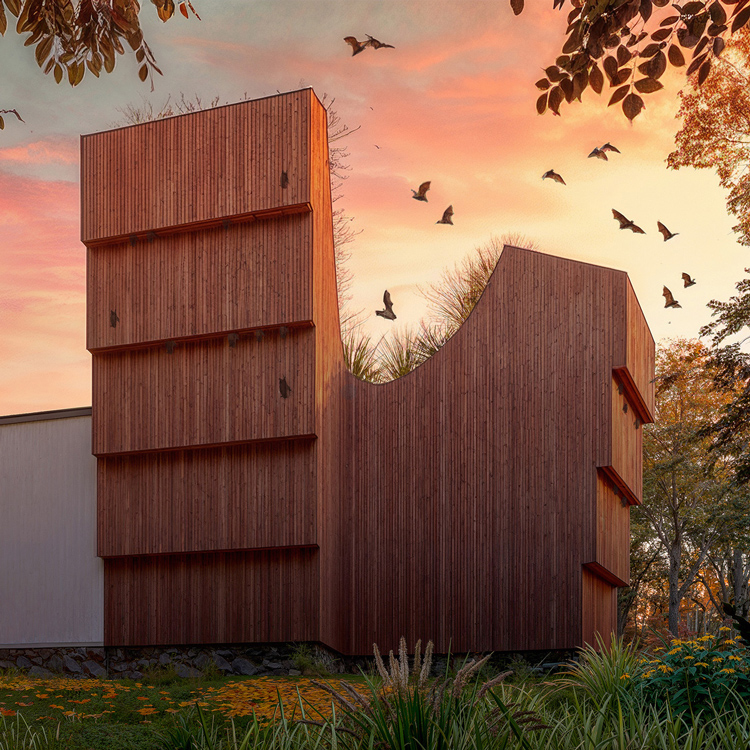
Bathaus is a small hybrid building that expands the visitor center at the Gropius House while simultaneously functioning as an ecologically sensitive bat sanctuary. Integrated directly into the architecture, a series of vertical slot bat habitats are carved into the façade and form.
Expanding the mission of the local Biscayne National Park Institute, MICROGROVE is a living research community designed for scientists, ecologists, researchers, and eco-tourists, dedicated to the study, restoration, and increased social awareness of coastal ecosystems.
QTCT is tasked to blend these two identities onto one site—a give and take relationship between beach ambitions and urban necessities. QTCT is a sampling of two worlds: on one hand it is the embodiment of the language of the beach and on the other it is a detailed and exacting built urban space.
The GBN project sites itself as this link connecting the busiest night life district and revitalized neighborhood park in the north, the largest beach front in the city to the south, and establishes the cities first large public plaza and recreation fields adjacent to the new building.
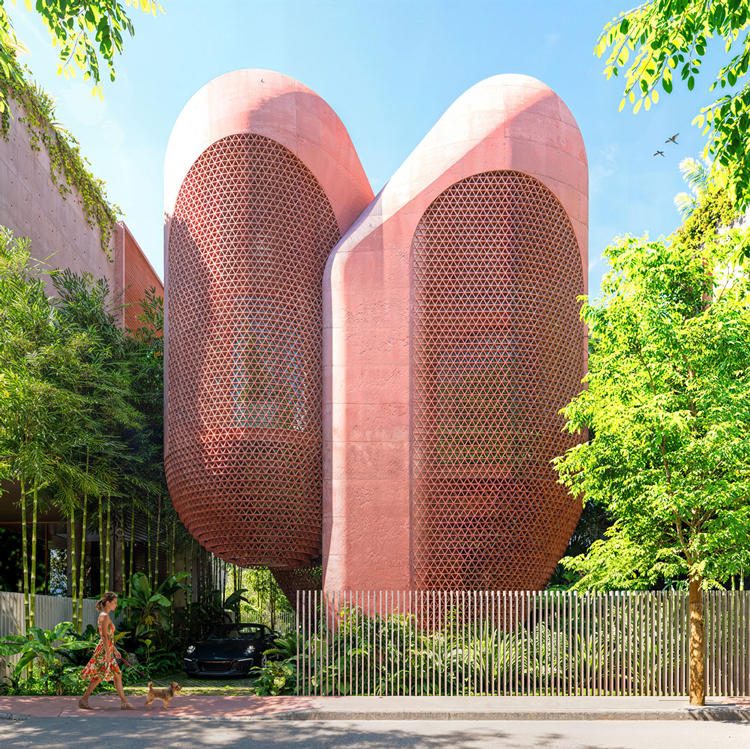
The Miami Beach House is constructed as a series of platformed spaces that continuously step upward within a tropically climatized shell. Continuing the structural experiments of the Metabolist movement, thirteen modular concrete platforms branch from two vertical cores.
Seating design is vital in fostering communal interactions in shared spaces. Rooted in the organic growth principles of the Metabolist movement and the transformational geometric language of digital Metaballs, Meta-Bench forms an experiential seating system which individuals can move and adjust.
Space has become redundant again. Popular culture is uninterested in the goings-on in space. Once achieved, mans absurd relation with space becomes yesterdays news. To become relevant to the public, CASIS must be an amenity and not a mission. Instead of promoting an HQ, make it a public interface.

OTHER RESEARCH