FVDC
—
—
Modular Fab Tower
Volumetric Unit Assembly

Modular Fab Tower

Section sketch looking at the assembly system for delivery multiple components of a house at will in FVDCSection sketch looking at the assembly system for delivery multiple components of a house at will in FVDCSection sketch looking at the assembly system for delivery multiple components of a house at will in FVDCSection sketch looking at the assembly system for delivery multiple components of a house at will in FVDC

RELATED RESEARCH IMAGES

RELATED PROJECT IMAGES

Diagrams from Richard Rogers' Zip-Up House as the basis for proposing modular units that can be zipped together for FVDCDiagrams from Richard Rogers' Zip-Up House as the basis for proposing modular units that can be zipped together for FVDCDiagrams from Richard Rogers' Zip-Up House as the basis for proposing modular units that can be zipped together for FVDCDiagrams from Richard Rogers' Zip-Up House as the basis for proposing modular units that can be zipped together for FVDC
Board combining the various concepts and drawings for the FVDC project for presentationBoard combining the various concepts and drawings for the FVDC project for presentationBoard combining the various concepts and drawings for the FVDC project for presentationBoard combining the various concepts and drawings for the FVDC project for presentation
Series of diagrams illustrating the relationship between the unit volumes, the central shaft and the FVDC structural systemSeries of diagrams illustrating the relationship between the unit volumes, the central shaft and the FVDC structural systemSeries of diagrams illustrating the relationship between the unit volumes, the central shaft and the FVDC structural systemSeries of diagrams illustrating the relationship between the unit volumes, the central shaft and the FVDC structural system
Overall building tower plan with three units, vertical circulation and plan on each floor with FVDC unit delivery systemOverall building tower plan with three units, vertical circulation and plan on each floor with FVDC unit delivery systemOverall building tower plan with three units, vertical circulation and plan on each floor with FVDC unit delivery systemOverall building tower plan with three units, vertical circulation and plan on each floor with FVDC unit delivery system
Diagram concept combining various modular concepts into the FVDC housing tower: framework, delivered units, lift, and gasketsDiagram concept combining various modular concepts into the FVDC housing tower: framework, delivered units, lift, and gasketsDiagram concept combining various modular concepts into the FVDC housing tower: framework, delivered units, lift, and gasketsDiagram concept combining various modular concepts into the FVDC housing tower: framework, delivered units, lift, and gaskets
Set of diagrams illustrating the raw volume potential to be assembled and infilled by various delivered FVDC modular piecesSet of diagrams illustrating the raw volume potential to be assembled and infilled by various delivered FVDC modular piecesSet of diagrams illustrating the raw volume potential to be assembled and infilled by various delivered FVDC modular piecesSet of diagrams illustrating the raw volume potential to be assembled and infilled by various delivered FVDC modular pieces
Elevation drawing of the skinny housing cylinder with units and shared spaces weaving throughout the FVDC towerElevation drawing of the skinny housing cylinder with units and shared spaces weaving throughout the FVDC towerElevation drawing of the skinny housing cylinder with units and shared spaces weaving throughout the FVDC towerElevation drawing of the skinny housing cylinder with units and shared spaces weaving throughout the FVDC tower
Series of diagrams explaining the shortcomings of the Capsule Tower and Zip-Up House to be tested with FVDCSeries of diagrams explaining the shortcomings of the Capsule Tower and Zip-Up House to be tested with FVDCSeries of diagrams explaining the shortcomings of the Capsule Tower and Zip-Up House to be tested with FVDCSeries of diagrams explaining the shortcomings of the Capsule Tower and Zip-Up House to be tested with FVDC
Axon and plan drawings of the Nakagin Capsule Tower calling for FVDC modular housing to forget using the same unitAxon and plan drawings of the Nakagin Capsule Tower calling for FVDC modular housing to forget using the same unitAxon and plan drawings of the Nakagin Capsule Tower calling for FVDC modular housing to forget using the same unitAxon and plan drawings of the Nakagin Capsule Tower calling for FVDC modular housing to forget using the same unit
Diagrammatic illustrations showing how and where the delivery and connections of the FVDC units would take placeDiagrammatic illustrations showing how and where the delivery and connections of the FVDC units would take placeDiagrammatic illustrations showing how and where the delivery and connections of the FVDC units would take placeDiagrammatic illustrations showing how and where the delivery and connections of the FVDC units would take place
Diagram of automated parking structures as a basis for swapping units in the FVDC housing proposalDiagram of automated parking structures as a basis for swapping units in the FVDC housing proposalDiagram of automated parking structures as a basis for swapping units in the FVDC housing proposalDiagram of automated parking structures as a basis for swapping units in the FVDC housing proposal

OTHER PROJECTS

QTCT is tasked to blend these two identities onto one site—a give and take relationship between beach ambitions and urban necessities. QTCT is a sampling of two worlds: on one hand it is the embodiment of the language of the beach and on the other it is a detailed and exacting built urban space.
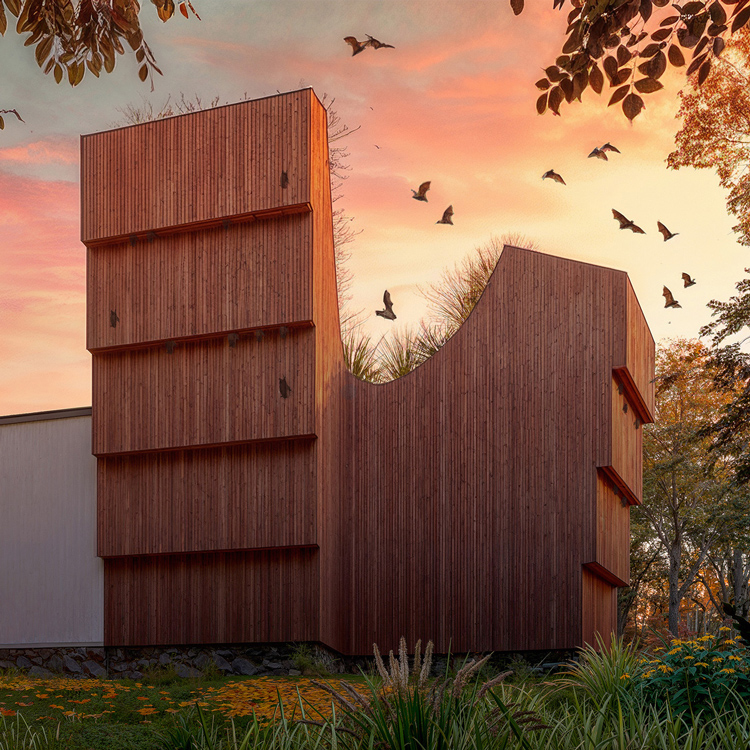
Bathaus is a small hybrid building that expands the visitor center at the Gropius House while simultaneously functioning as an ecologically sensitive bat sanctuary. Integrated directly into the architecture, a series of vertical slot bat habitats are carved into the façade and form.
The Urban Test Object (UTO) serves as a large-scale intervention that accelerates our relationship with the future city. Rather than solving issues like density, infrastructure, or access, the UTO heightens awareness of the rapid urban transformations shaping our future.
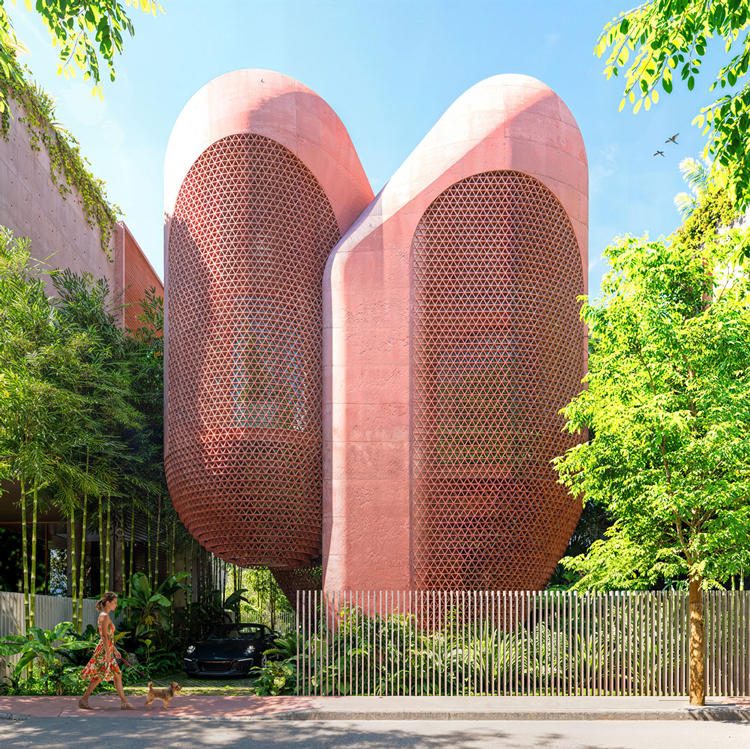
The Miami Beach House is constructed as a series of platformed spaces that continuously step upward within a tropically climatized shell. Continuing the structural experiments of the Metabolist movement, thirteen modular concrete platforms branch from two vertical cores.
The CART live/work housing prototype adds a vertical profile to downtown while converting an underutilized public path into an urban gesture by introducing of a specialized food cart zone in New Haven. The CART residents would rent and appropriate the moving space as a means of expanding their zone.
Seeing Park Avenue as an underutilized zone that connects four vibrant neighborhoods from 42nd Street to 144th Street, Infrastructural Infill is a study testing the potential to locate a combination of mixed-use housing and transportation in the residual spaces caused by urban infrastructure.
In Tempe there are two pedestrian axes: Mill Avenue and Palm Walk. Mill Avenue is successful and Palm Walk is not. Is there a way to make the palm trees useful to the students? The PEP structure is powered by buried hydraulic pressure systems giving vertical movement to the layer/palm interface.
Framework: Inverted Square Pyramid (FW:ISP) reimagines the traditional pyramid by flipping it upside down, shifting its focus from the cosmos to the people. The structure’s apexes become seating points within a flexible, interactive framework that encourages public engagement and play.

OTHER RESEARCH