ADC3
Alternative Desert Cities 3
Carter Model Perspective

Alternative Desert Cities 3

Front perspective of a model showing various pyramidal forms stepping up the side of a mountain by student Lamarra CarterFront perspective of a model showing various pyramidal forms stepping up the side of a mountain by student Lamarra CarterFront perspective of a model showing various pyramidal forms stepping up the side of a mountain by student Lamarra CarterFront perspective of a model showing various pyramidal forms stepping up the side of a mountain by student Lamarra Carter

RELATED RESEARCH IMAGES

RELATED PROJECT IMAGES

OTHER PROJECTS

The YELE music studio competition, underway before the earthquake, must respond now, but plan for the future of the community. Music is relief in a time of tragedy. The goal is to meet the most basic survival needs now while leaving spaces for future growth through self sustaining phases.
QTCT is tasked to blend these two identities onto one site—a give and take relationship between beach ambitions and urban necessities. QTCT is a sampling of two worlds: on one hand it is the embodiment of the language of the beach and on the other it is a detailed and exacting built urban space.
University Island is a swirling shapeshifter, in both the landscape and the architecture, that offers it’s undefined field of opportunities to the students and anticipates that each will discover and produce their own individual relationship with the island and their education.
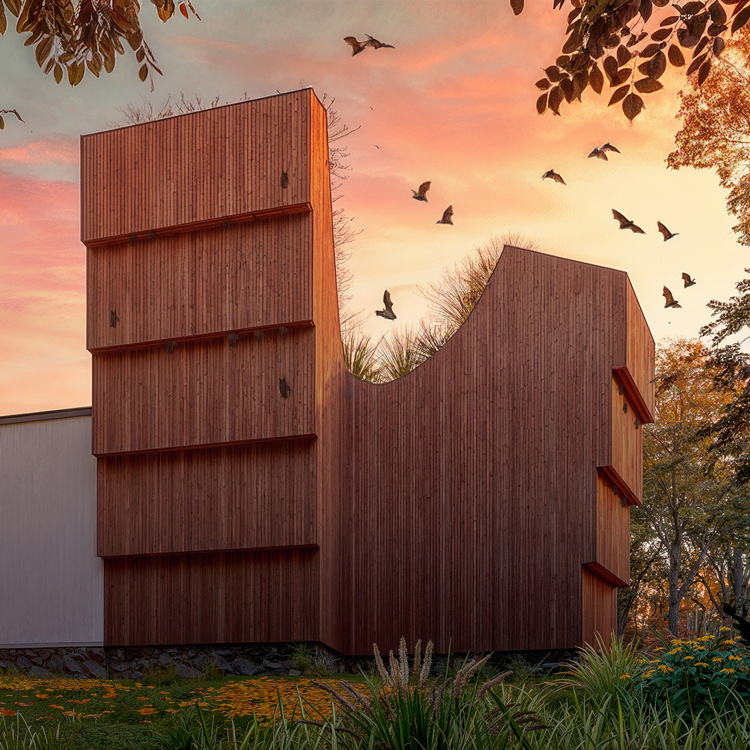
Bathaus is a small hybrid building that expands the visitor center at the Gropius House while simultaneously functioning as an ecologically sensitive bat sanctuary. Integrated directly into the architecture, a series of vertical slot bat habitats are carved into the façade and form.
Seeing Park Avenue as an underutilized zone that connects four vibrant neighborhoods from 42nd Street to 144th Street, Infrastructural Infill is a study testing the potential to locate a combination of mixed-use housing and transportation in the residual spaces caused by urban infrastructure.
The challenge of creating a pair of studio apartments that can fill a lifted 16'x16' void necessitates the creation of a quick, mobile, and opportunistic building system that can react to the found conditions of the site. Access to the site is limited and the ground must be free.
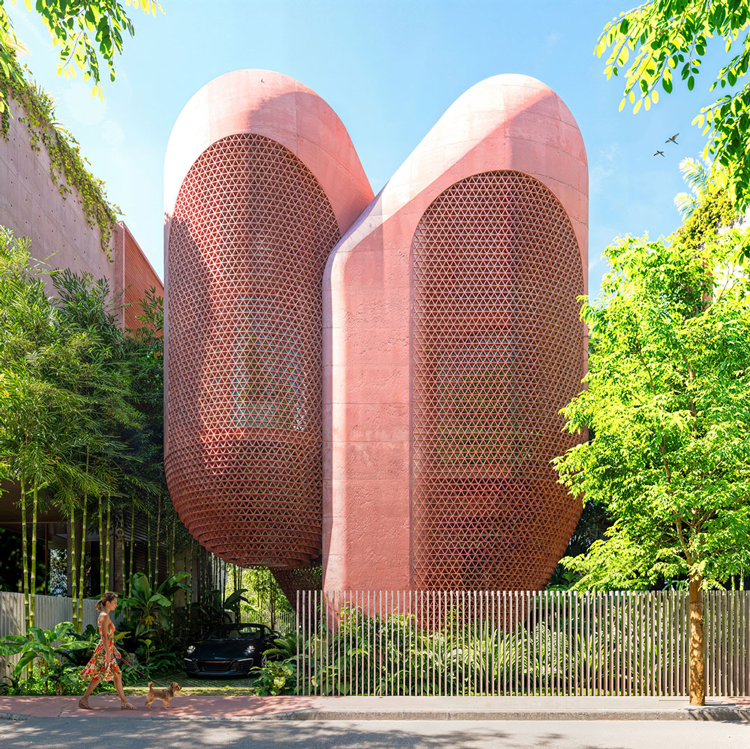
The Miami Beach House is constructed as a series of platformed spaces that continuously step upward within a tropically climatized shell. Continuing the structural experiments of the Metabolist movement, thirteen modular concrete platforms branch from two vertical cores.
Expanding the mission of the local Biscayne National Park Institute, MICROGROVE is a living research community designed for scientists, ecologists, researchers, and eco-tourists, dedicated to the study, restoration, and increased social awareness of coastal ecosystems.

OTHER RESEARCH