ADC1
Alternative Desert Cities 1
Pedregon Urban Perspective

Alternative Desert Cities 1

Perspective illustrating the scale of an linear rammed-earth housing infrastructure in the suburbs by student Rikkie PedregonPerspective illustrating the scale of an linear rammed-earth housing infrastructure in the suburbs by student Rikkie PedregonPerspective illustrating the scale of an linear rammed-earth housing infrastructure in the suburbs by student Rikkie PedregonPerspective illustrating the scale of an linear rammed-earth housing infrastructure in the suburbs by student Rikkie Pedregon

RELATED RESEARCH IMAGES

RELATED PROJECT IMAGES

OTHER PROJECTS

QTCT is tasked to blend these two identities onto one site—a give and take relationship between beach ambitions and urban necessities. QTCT is a sampling of two worlds: on one hand it is the embodiment of the language of the beach and on the other it is a detailed and exacting built urban space.
Expanding the mission of the local Biscayne National Park Institute, MICROGROVE is a living research community designed for scientists, ecologists, researchers, and eco-tourists, dedicated to the study, restoration, and increased social awareness of coastal ecosystems.
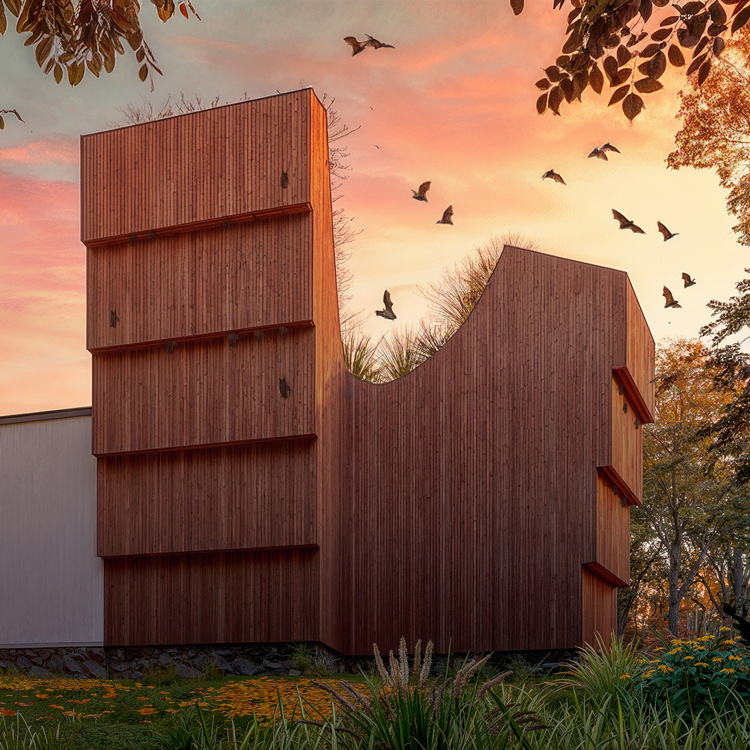
Bathaus is a small hybrid building that expands the visitor center at the Gropius House while simultaneously functioning as an ecologically sensitive bat sanctuary. Integrated directly into the architecture, a series of vertical slot bat habitats are carved into the façade and form.
Utilizing built form as a strategic carrier of culture in opposition of the status quo, the Hellinikon project links the disconnected suburban mountain communities to the east with the sea to the west while splitting the Hellinikon International Airport and Olympic Park into distinct zones.
Scaffolding is often seen as a temporary urban necessity—functional, but rarely celebrated. This project reimagines scaffolding as an architectural intervention and public art piece throughout Española Way, transforming it into a vibrant, interactive element in Miami Beach’s urban fabric.
In Tempe there are two pedestrian axes: Mill Avenue and Palm Walk. Mill Avenue is successful and Palm Walk is not. Is there a way to make the palm trees useful to the students? The PEP structure is powered by buried hydraulic pressure systems giving vertical movement to the layer/palm interface.
University Island is a swirling shapeshifter, in both the landscape and the architecture, that offers it’s undefined field of opportunities to the students and anticipates that each will discover and produce their own individual relationship with the island and their education.
The GBN project sites itself as this link connecting the busiest night life district and revitalized neighborhood park in the north, the largest beach front in the city to the south, and establishes the cities first large public plaza and recreation fields adjacent to the new building.

OTHER RESEARCH