ADC2
Alternative Desert Cities 2
Lobato Farming Seasons

Alternative Desert Cities 2

Pair of perspectives illustrating the communal shifts in the farmed landscape between seasons by student Alejandra LobatoPair of perspectives illustrating the communal shifts in the farmed landscape between seasons by student Alejandra LobatoPair of perspectives illustrating the communal shifts in the farmed landscape between seasons by student Alejandra LobatoPair of perspectives illustrating the communal shifts in the farmed landscape between seasons by student Alejandra Lobato

RELATED RESEARCH IMAGES

RELATED PROJECT IMAGES

OTHER PROJECTS

In Tempe there are two pedestrian axes: Mill Avenue and Palm Walk. Mill Avenue is successful and Palm Walk is not. Is there a way to make the palm trees useful to the students? The PEP structure is powered by buried hydraulic pressure systems giving vertical movement to the layer/palm interface.
The YELE music studio competition, underway before the earthquake, must respond now, but plan for the future of the community. Music is relief in a time of tragedy. The goal is to meet the most basic survival needs now while leaving spaces for future growth through self sustaining phases.
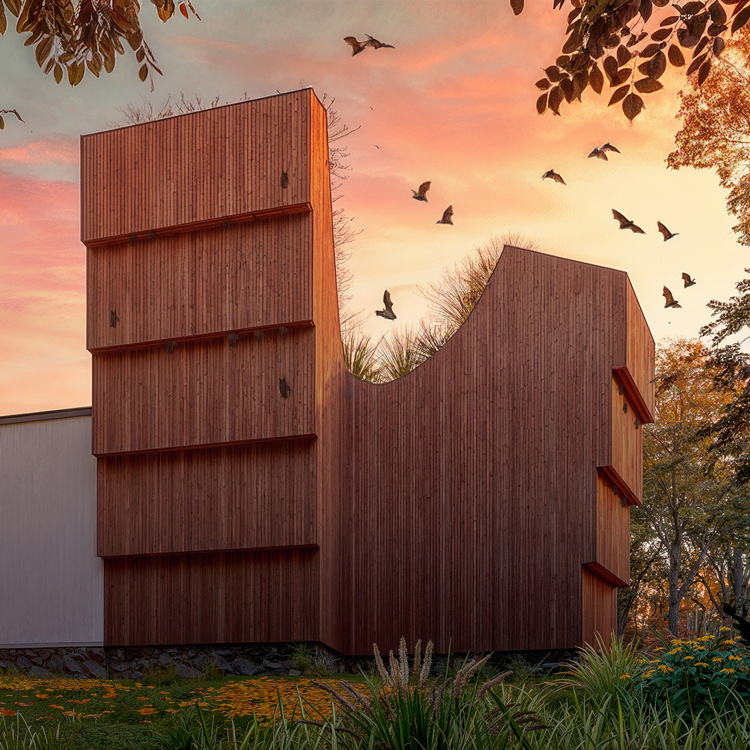
Bathaus is a small hybrid building that expands the visitor center at the Gropius House while simultaneously functioning as an ecologically sensitive bat sanctuary. Integrated directly into the architecture, a series of vertical slot bat habitats are carved into the façade and form.
Seating design is vital in fostering communal interactions in shared spaces. Rooted in the organic growth principles of the Metabolist movement and the transformational geometric language of digital Metaballs, Meta-Bench forms an experiential seating system which individuals can move and adjust.
Scaffolding is often seen as a temporary urban necessity—functional, but rarely celebrated. This project reimagines scaffolding as an architectural intervention and public art piece throughout Española Way, transforming it into a vibrant, interactive element in Miami Beach’s urban fabric.
Infrastructure as urban performance. Serving as both a backdrop to elegant theatrical dances and a framework for holding a wandering public, the Dance Machine enacts performance through both its program and its existence as a merged urban extension of the Queensboro Bridge.
The Miami Beach House is constructed as a series of platformed spaces that continuously step upward within a tropically climatized shell. Continuing the structural experiments of the Metabolist movement, thirteen modular concrete platforms branch from two vertical cores.
The challenge of creating a pair of studio apartments that can fill a lifted 16'x16' void necessitates the creation of a quick, mobile, and opportunistic building system that can react to the found conditions of the site. Access to the site is limited and the ground must be free.

OTHER RESEARCH