ADC1
—
—
Alternative Desert Cities 1
Borie Aerial Site Perspective

Alternative Desert Cities 1

Aerial site perspective of urban masses that collect and harvest water along the canal by student Isabelle BorieAerial site perspective of urban masses that collect and harvest water along the canal by student Isabelle BorieAerial site perspective of urban masses that collect and harvest water along the canal by student Isabelle BorieAerial site perspective of urban masses that collect and harvest water along the canal by student Isabelle Borie

RELATED RESEARCH IMAGES

RELATED PROJECT IMAGES

OTHER PROJECTS

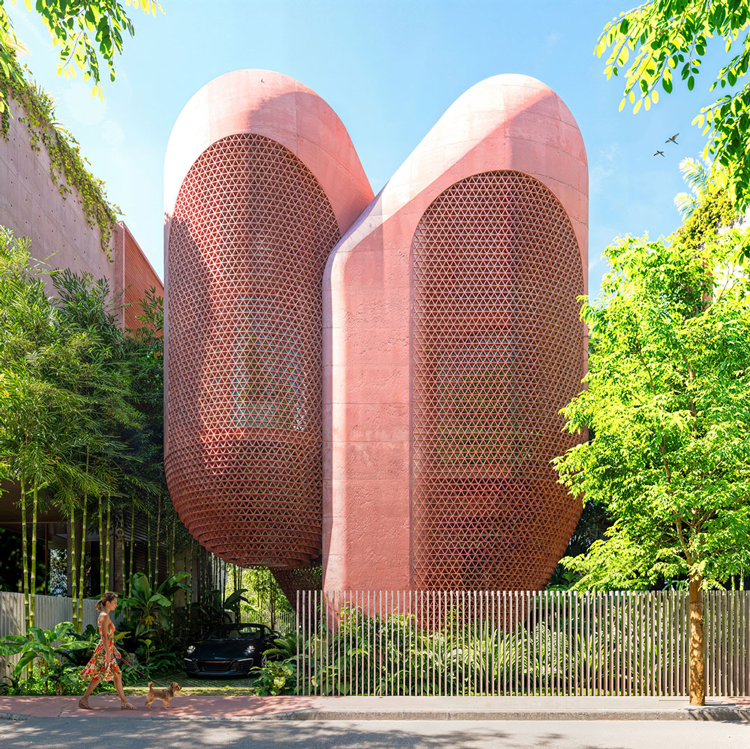
The Miami Beach House is constructed as a series of platformed spaces that continuously step upward within a tropically climatized shell. Continuing the structural experiments of the Metabolist movement, thirteen modular concrete platforms branch from two vertical cores.
Seating design is vital in fostering communal interactions in shared spaces. Rooted in the organic growth principles of the Metabolist movement and the transformational geometric language of digital Metaballs, Meta-Bench forms an experiential seating system which individuals can move and adjust.
University Island is a swirling shapeshifter, in both the landscape and the architecture, that offers it’s undefined field of opportunities to the students and anticipates that each will discover and produce their own individual relationship with the island and their education.
Space has become redundant again. Popular culture is uninterested in the goings-on in space. Once achieved, mans absurd relation with space becomes yesterdays news. To become relevant to the public, CASIS must be an amenity and not a mission. Instead of promoting an HQ, make it a public interface.
The Butterfly Theater is a living pavilion—part sculpture, part habitat, part playground. It takes inspiration from the elegance of flamingos and the presence of butterflies in Miami Beach, transforming the park’s open center into a place of movement, color, and quiet spectacle.
QTCT is tasked to blend these two identities onto one site—a give and take relationship between beach ambitions and urban necessities. QTCT is a sampling of two worlds: on one hand it is the embodiment of the language of the beach and on the other it is a detailed and exacting built urban space.
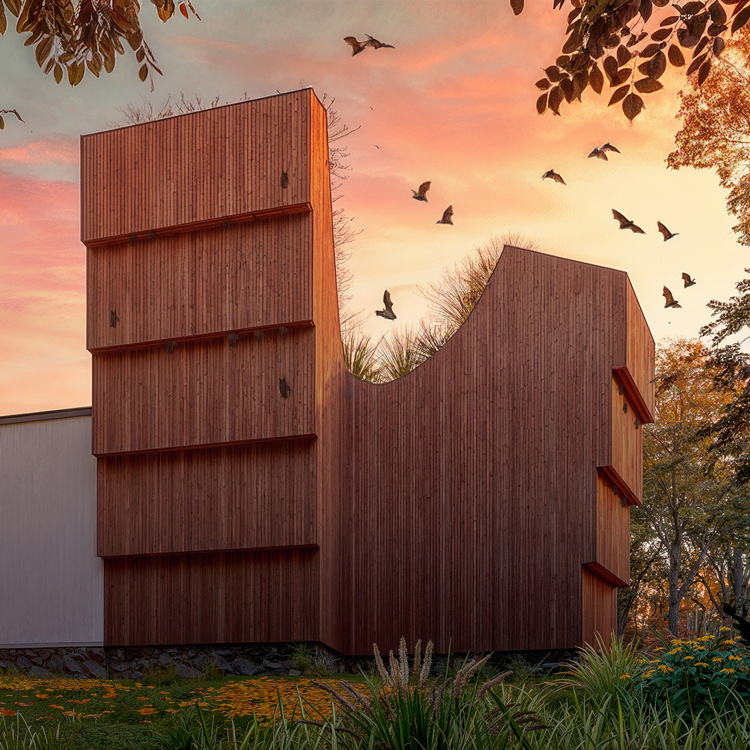
Bathaus is a small hybrid building that expands the visitor center at the Gropius House while simultaneously functioning as an ecologically sensitive bat sanctuary. Integrated directly into the architecture, a series of vertical slot bat habitats are carved into the façade and form.
Scaffolding is often seen as a temporary urban necessity—functional, but rarely celebrated. This project reimagines scaffolding as an architectural intervention and public art piece throughout Española Way, transforming it into a vibrant, interactive element in Miami Beach’s urban fabric.

OTHER RESEARCH