NPSP
Craft School
Student Craft Projects

Craft School

Examples of how students can customize the school and be involved in the processExamples of how students can customize the school and be involved in the processExamples of how students can customize the school and be involved in the processExamples of how students can customize the school and be involved in the process

RELATED RESEARCH IMAGES

RELATED PROJECT IMAGES

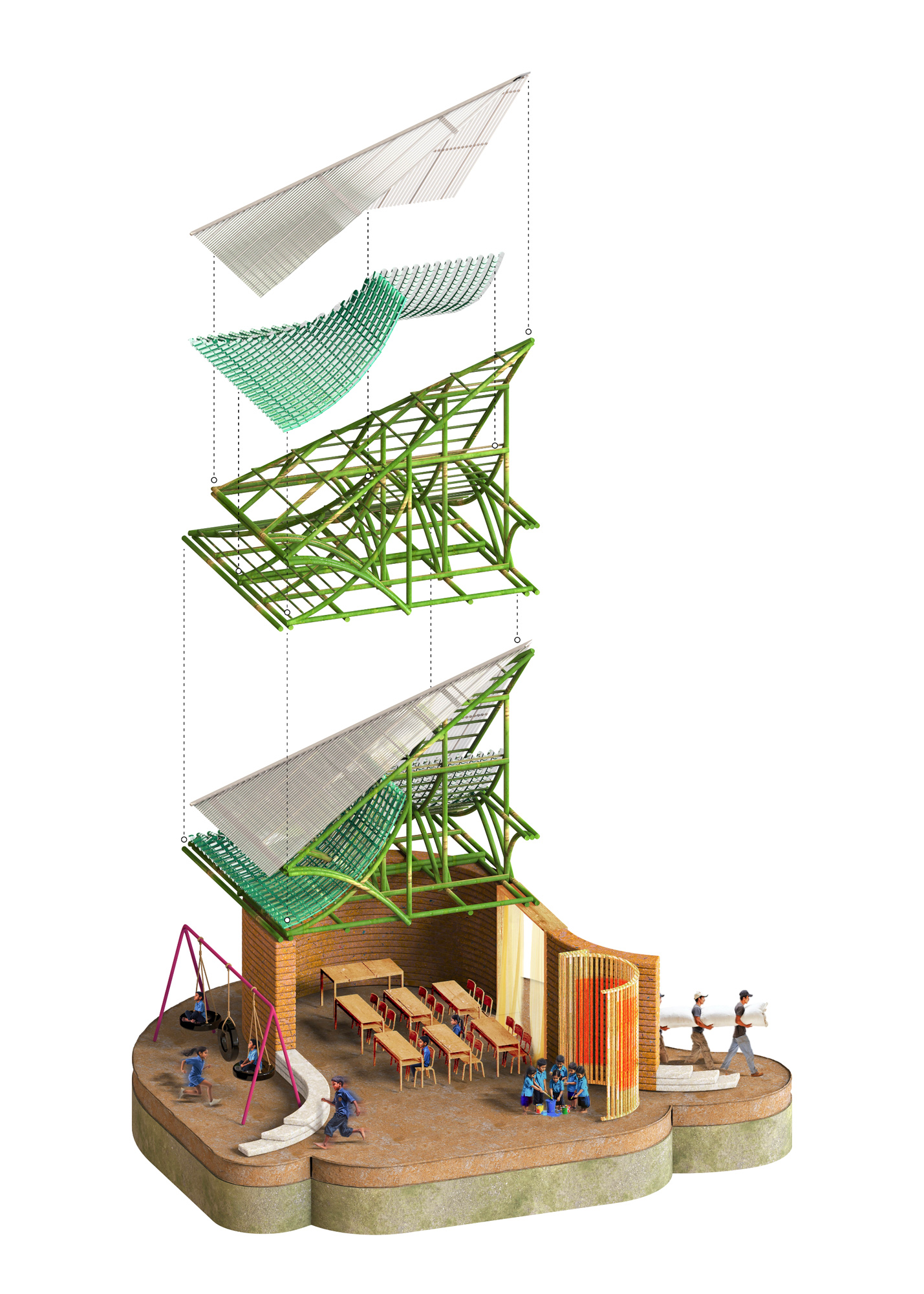
Interior classroom during a lesson showing the layered double roof structureInterior classroom during a lesson showing the layered double roof structureInterior classroom during a lesson showing the layered double roof structureInterior classroom during a lesson showing the layered double roof structure
Elevation perspective showing the school profile related to the mountains of NepalElevation perspective showing the school profile related to the mountains of NepalElevation perspective showing the school profile related to the mountains of NepalElevation perspective showing the school profile related to the mountains of Nepal
The arrival platform and orchard welcoming students to the schoolThe arrival platform and orchard welcoming students to the schoolThe arrival platform and orchard welcoming students to the schoolThe arrival platform and orchard welcoming students to the school
Simple diagram of the various student-inspired craft details for building the schoolSimple diagram of the various student-inspired craft details for building the schoolSimple diagram of the various student-inspired craft details for building the schoolSimple diagram of the various student-inspired craft details for building the school
Site plan of the Nepal School showing the repeated classrooms and mixed programsSite plan of the Nepal School showing the repeated classrooms and mixed programsSite plan of the Nepal School showing the repeated classrooms and mixed programsSite plan of the Nepal School showing the repeated classrooms and mixed programs
Interior courtyard of the school complex with a garden and spaces for classesInterior courtyard of the school complex with a garden and spaces for classesInterior courtyard of the school complex with a garden and spaces for classesInterior courtyard of the school complex with a garden and spaces for classes
Exploded chunk diagram of the various construction components for the repeated systemExploded chunk diagram of the various construction components for the repeated systemExploded chunk diagram of the various construction components for the repeated systemExploded chunk diagram of the various construction components for the repeated system
Paired elevation and section drawings of the double roof school structuresPaired elevation and section drawings of the double roof school structuresPaired elevation and section drawings of the double roof school structuresPaired elevation and section drawings of the double roof school structures
Series of diagrams explaining the functioning of the school complexSeries of diagrams explaining the functioning of the school complexSeries of diagrams explaining the functioning of the school complexSeries of diagrams explaining the functioning of the school complex
Wall section of a typical earthbag wall used for the classroom spacesWall section of a typical earthbag wall used for the classroom spacesWall section of a typical earthbag wall used for the classroom spacesWall section of a typical earthbag wall used for the classroom spaces
Perspective view showing playgrounds and blended indoor-outdoor learningPerspective view showing playgrounds and blended indoor-outdoor learningPerspective view showing playgrounds and blended indoor-outdoor learningPerspective view showing playgrounds and blended indoor-outdoor learning
Reading rooms are places where students can find their own space to learn alone or in groupsReading rooms are places where students can find their own space to learn alone or in groupsReading rooms are places where students can find their own space to learn alone or in groupsReading rooms are places where students can find their own space to learn alone or in groups

OTHER PROJECTS

Framework: Inverted Square Pyramid (FW:ISP) reimagines the traditional pyramid by flipping it upside down, shifting its focus from the cosmos to the people. The structure’s apexes become seating points within a flexible, interactive framework that encourages public engagement and play.
The RACA project must meet two demands: A. REFLECTION (museum) or B. CONTINUATION (practice + addition). The current program and its stagnancy has left the site forgotten—it is a typical static museum on a living site. The site and addition must constantly change through the participation of people.
The Urban Test Object (UTO) serves as a large-scale intervention that accelerates our relationship with the future city. Rather than solving issues like density, infrastructure, or access, the UTO heightens awareness of the rapid urban transformations shaping our future.
University Island is a swirling shapeshifter, in both the landscape and the architecture, that offers it’s undefined field of opportunities to the students and anticipates that each will discover and produce their own individual relationship with the island and their education.
Infrastructure as urban performance. Serving as both a backdrop to elegant theatrical dances and a framework for holding a wandering public, the Dance Machine enacts performance through both its program and its existence as a merged urban extension of the Queensboro Bridge.
QTCT is tasked to blend these two identities onto one site—a give and take relationship between beach ambitions and urban necessities. QTCT is a sampling of two worlds: on one hand it is the embodiment of the language of the beach and on the other it is a detailed and exacting built urban space.
Coney Island will remain a MUTANT appendage at the farthest shore of New York City. Coney is an agglomeration of all of its histories and should continue to simultaneously move each agenda forward. Coney will continue to evolve through mutations— this vision will accelerate its hybridity.
Seeing Park Avenue as an underutilized zone that connects four vibrant neighborhoods from 42nd Street to 144th Street, Infrastructural Infill is a study testing the potential to locate a combination of mixed-use housing and transportation in the residual spaces caused by urban infrastructure.

OTHER RESEARCH