ADC2
Alternative Desert Cities 2
Powell Phoenix Suburban Concept Collage

Alternative Desert Cities 2

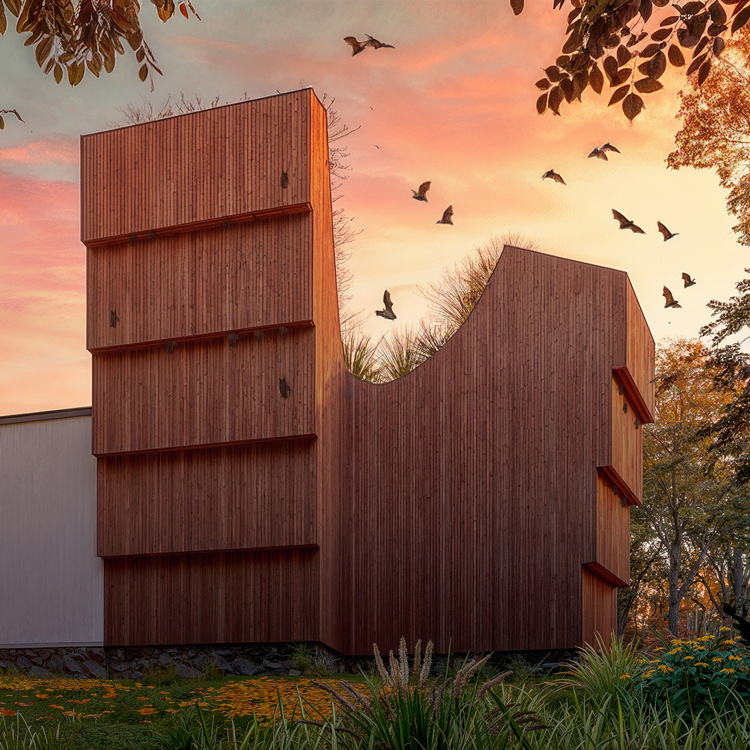
Concept collage projecting the Phoenix suburbs in 2070 as inhospitable for human habitation by student Brandon PowellConcept collage projecting the Phoenix suburbs in 2070 as inhospitable for human habitation by student Brandon PowellConcept collage projecting the Phoenix suburbs in 2070 as inhospitable for human habitation by student Brandon PowellConcept collage projecting the Phoenix suburbs in 2070 as inhospitable for human habitation by student Brandon Powell

RELATED RESEARCH IMAGES

RELATED PROJECT IMAGES

OTHER PROJECTS

The Urban Test Object (UTO) serves as a large-scale intervention that accelerates our relationship with the future city. Rather than solving issues like density, infrastructure, or access, the UTO heightens awareness of the rapid urban transformations shaping our future.
Infrastructure as urban performance. Serving as both a backdrop to elegant theatrical dances and a framework for holding a wandering public, the Dance Machine enacts performance through both its program and its existence as a merged urban extension of the Queensboro Bridge.
The YELE music studio competition, underway before the earthquake, must respond now, but plan for the future of the community. Music is relief in a time of tragedy. The goal is to meet the most basic survival needs now while leaving spaces for future growth through self sustaining phases.
Coney Island will remain a MUTANT appendage at the farthest shore of New York City. Coney is an agglomeration of all of its histories and should continue to simultaneously move each agenda forward. Coney will continue to evolve through mutations— this vision will accelerate its hybridity.
The Craft School is a participatory design and construction initiative that places students at the center of creating their own learning environment. It recognizes that education is not only about what happens inside the classroom, but also how the classroom comes to be.
QTCT is tasked to blend these two identities onto one site—a give and take relationship between beach ambitions and urban necessities. QTCT is a sampling of two worlds: on one hand it is the embodiment of the language of the beach and on the other it is a detailed and exacting built urban space.
University Island is a swirling shapeshifter, in both the landscape and the architecture, that offers it’s undefined field of opportunities to the students and anticipates that each will discover and produce their own individual relationship with the island and their education.
Space has become redundant again. Popular culture is uninterested in the goings-on in space. Once achieved, mans absurd relation with space becomes yesterdays news. To become relevant to the public, CASIS must be an amenity and not a mission. Instead of promoting an HQ, make it a public interface.

OTHER RESEARCH