ADC1
Alternative Desert Cities 1
Paulis Massing

Alternative Desert Cities 1

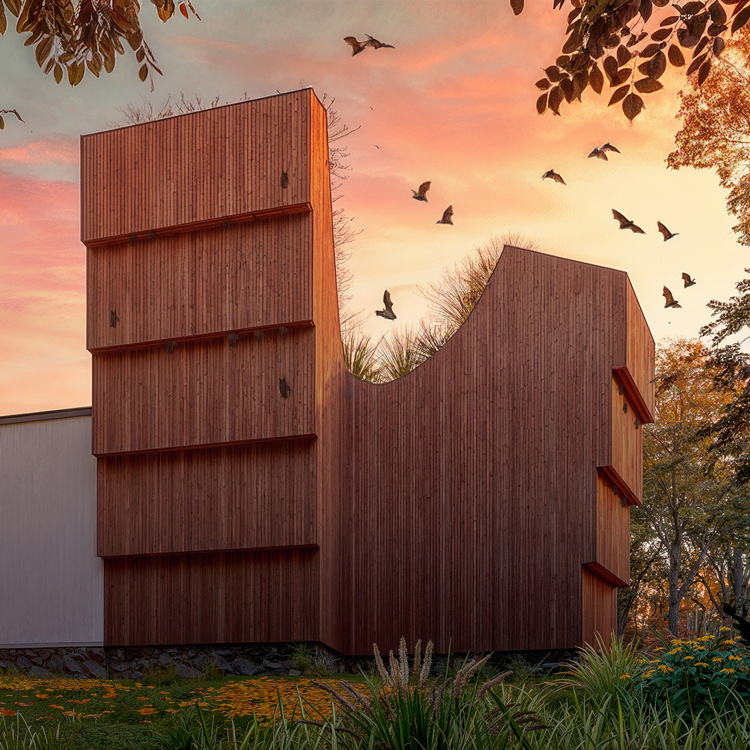
Massing perspective of a proposal for a self-sustaining community set in the desert landscape by student Monique PaulisMassing perspective of a proposal for a self-sustaining community set in the desert landscape by student Monique PaulisMassing perspective of a proposal for a self-sustaining community set in the desert landscape by student Monique PaulisMassing perspective of a proposal for a self-sustaining community set in the desert landscape by student Monique Paulis

RELATED RESEARCH IMAGES

RELATED PROJECT IMAGES

OTHER PROJECTS

Utilizing built form as a strategic carrier of culture in opposition of the status quo, the Hellinikon project links the disconnected suburban mountain communities to the east with the sea to the west while splitting the Hellinikon International Airport and Olympic Park into distinct zones.
Expanding the mission of the local Biscayne National Park Institute, MICROGROVE is a living research community designed for scientists, ecologists, researchers, and eco-tourists, dedicated to the study, restoration, and increased social awareness of coastal ecosystems.
Infrastructure as urban performance. Serving as both a backdrop to elegant theatrical dances and a framework for holding a wandering public, the Dance Machine enacts performance through both its program and its existence as a merged urban extension of the Queensboro Bridge.
Planes, frames, and volumes are fundamentals to all assembly logics. With the proliferation of additive production methods, the possibility of volumetric prefabricated components has the potential to radically alter the way that we conceive of construction and the permanence of building parts.
Space has become redundant again. Popular culture is uninterested in the goings-on in space. Once achieved, mans absurd relation with space becomes yesterdays news. To become relevant to the public, CASIS must be an amenity and not a mission. Instead of promoting an HQ, make it a public interface.
The CART live/work housing prototype adds a vertical profile to downtown while converting an underutilized public path into an urban gesture by introducing of a specialized food cart zone in New Haven. The CART residents would rent and appropriate the moving space as a means of expanding their zone.
QTCT is tasked to blend these two identities onto one site—a give and take relationship between beach ambitions and urban necessities. QTCT is a sampling of two worlds: on one hand it is the embodiment of the language of the beach and on the other it is a detailed and exacting built urban space.
The YELE music studio competition, underway before the earthquake, must respond now, but plan for the future of the community. Music is relief in a time of tragedy. The goal is to meet the most basic survival needs now while leaving spaces for future growth through self sustaining phases.

OTHER RESEARCH