ADC3
—
—
Alternative Desert Cities 3
Munoz Exploded Diagram

Alternative Desert Cities 3

Exploded diagram showing the cores, plates, skins, and connections within the dense growth proposed by student Brayan MunozExploded diagram showing the cores, plates, skins, and connections within the dense growth proposed by student Brayan MunozExploded diagram showing the cores, plates, skins, and connections within the dense growth proposed by student Brayan MunozExploded diagram showing the cores, plates, skins, and connections within the dense growth proposed by student Brayan Munoz

RELATED RESEARCH IMAGES

RELATED PROJECT IMAGES

OTHER PROJECTS

The GBN project sites itself as this link connecting the busiest night life district and revitalized neighborhood park in the north, the largest beach front in the city to the south, and establishes the cities first large public plaza and recreation fields adjacent to the new building.
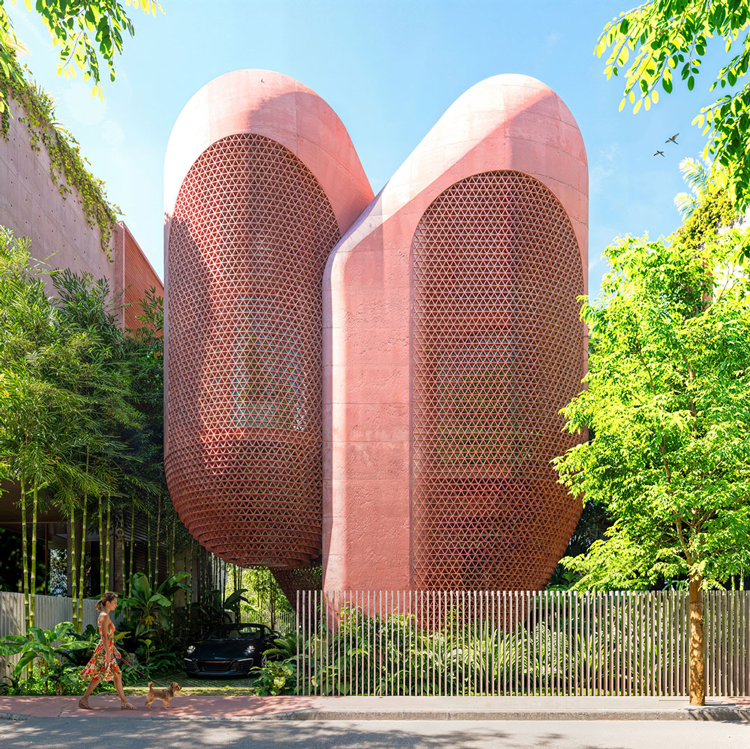
The Miami Beach House is constructed as a series of platformed spaces that continuously step upward within a tropically climatized shell. Continuing the structural experiments of the Metabolist movement, thirteen modular concrete platforms branch from two vertical cores.
Seeing Park Avenue as an underutilized zone that connects four vibrant neighborhoods from 42nd Street to 144th Street, Infrastructural Infill is a study testing the potential to locate a combination of mixed-use housing and transportation in the residual spaces caused by urban infrastructure.
QTCT is tasked to blend these two identities onto one site—a give and take relationship between beach ambitions and urban necessities. QTCT is a sampling of two worlds: on one hand it is the embodiment of the language of the beach and on the other it is a detailed and exacting built urban space.
Scaffolding is often seen as a temporary urban necessity—functional, but rarely celebrated. This project reimagines scaffolding as an architectural intervention and public art piece throughout Española Way, transforming it into a vibrant, interactive element in Miami Beach’s urban fabric.
Expanding the mission of the local Biscayne National Park Institute, MICROGROVE is a living research community designed for scientists, ecologists, researchers, and eco-tourists, dedicated to the study, restoration, and increased social awareness of coastal ecosystems.
Coney Island will remain a MUTANT appendage at the farthest shore of New York City. Coney is an agglomeration of all of its histories and should continue to simultaneously move each agenda forward. Coney will continue to evolve through mutations— this vision will accelerate its hybridity.
The challenge of creating a pair of studio apartments that can fill a lifted 16'x16' void necessitates the creation of a quick, mobile, and opportunistic building system that can react to the found conditions of the site. Access to the site is limited and the ground must be free.

OTHER RESEARCH