ADC3
—
—
Alternative Desert Cities 3
Benitez Concept Timeline

Alternative Desert Cities 3

Concept image illustrating a timeline from known urban form to a merged mountain/housing city by student Salvador BenitezConcept image illustrating a timeline from known urban form to a merged mountain/housing city by student Salvador BenitezConcept image illustrating a timeline from known urban form to a merged mountain/housing city by student Salvador BenitezConcept image illustrating a timeline from known urban form to a merged mountain/housing city by student Salvador Benitez

RELATED RESEARCH IMAGES
RELATED PROJECT IMAGES

OTHER PROJECTS

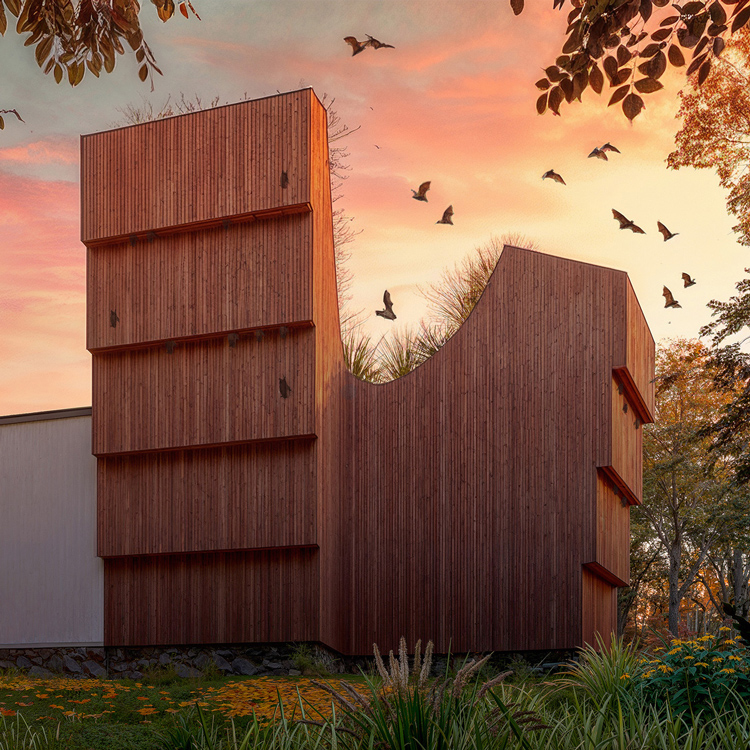
Bathaus is a small hybrid building that expands the visitor center at the Gropius House while simultaneously functioning as an ecologically sensitive bat sanctuary. Integrated directly into the architecture, a series of vertical slot bat habitats are carved into the façade and form.
The CART live/work housing prototype adds a vertical profile to downtown while converting an underutilized public path into an urban gesture by introducing of a specialized food cart zone in New Haven. The CART residents would rent and appropriate the moving space as a means of expanding their zone.
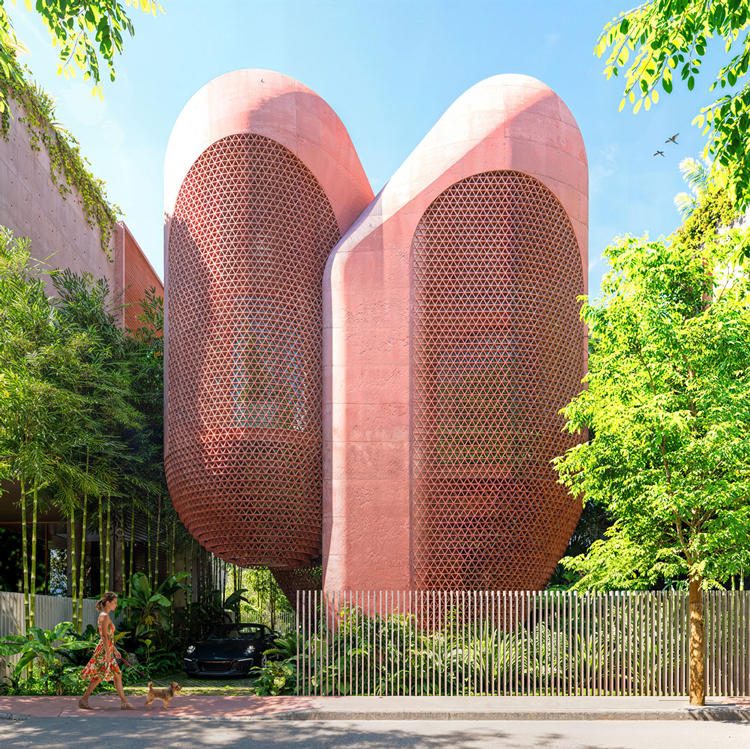
The Miami Beach House is constructed as a series of platformed spaces that continuously step upward within a tropically climatized shell. Continuing the structural experiments of the Metabolist movement, thirteen modular concrete platforms branch from two vertical cores.
Coney Island will remain a MUTANT appendage at the farthest shore of New York City. Coney is an agglomeration of all of its histories and should continue to simultaneously move each agenda forward. Coney will continue to evolve through mutations— this vision will accelerate its hybridity.
Utilizing built form as a strategic carrier of culture in opposition of the status quo, the Hellinikon project links the disconnected suburban mountain communities to the east with the sea to the west while splitting the Hellinikon International Airport and Olympic Park into distinct zones.
Infrastructure as urban performance. Serving as both a backdrop to elegant theatrical dances and a framework for holding a wandering public, the Dance Machine enacts performance through both its program and its existence as a merged urban extension of the Queensboro Bridge.
Seeing Park Avenue as an underutilized zone that connects four vibrant neighborhoods from 42nd Street to 144th Street, Infrastructural Infill is a study testing the potential to locate a combination of mixed-use housing and transportation in the residual spaces caused by urban infrastructure.
The Butterfly Theater is a living pavilion—part sculpture, part habitat, part playground. It takes inspiration from the elegance of flamingos and the presence of butterflies in Miami Beach, transforming the park’s open center into a place of movement, color, and quiet spectacle.

OTHER RESEARCH