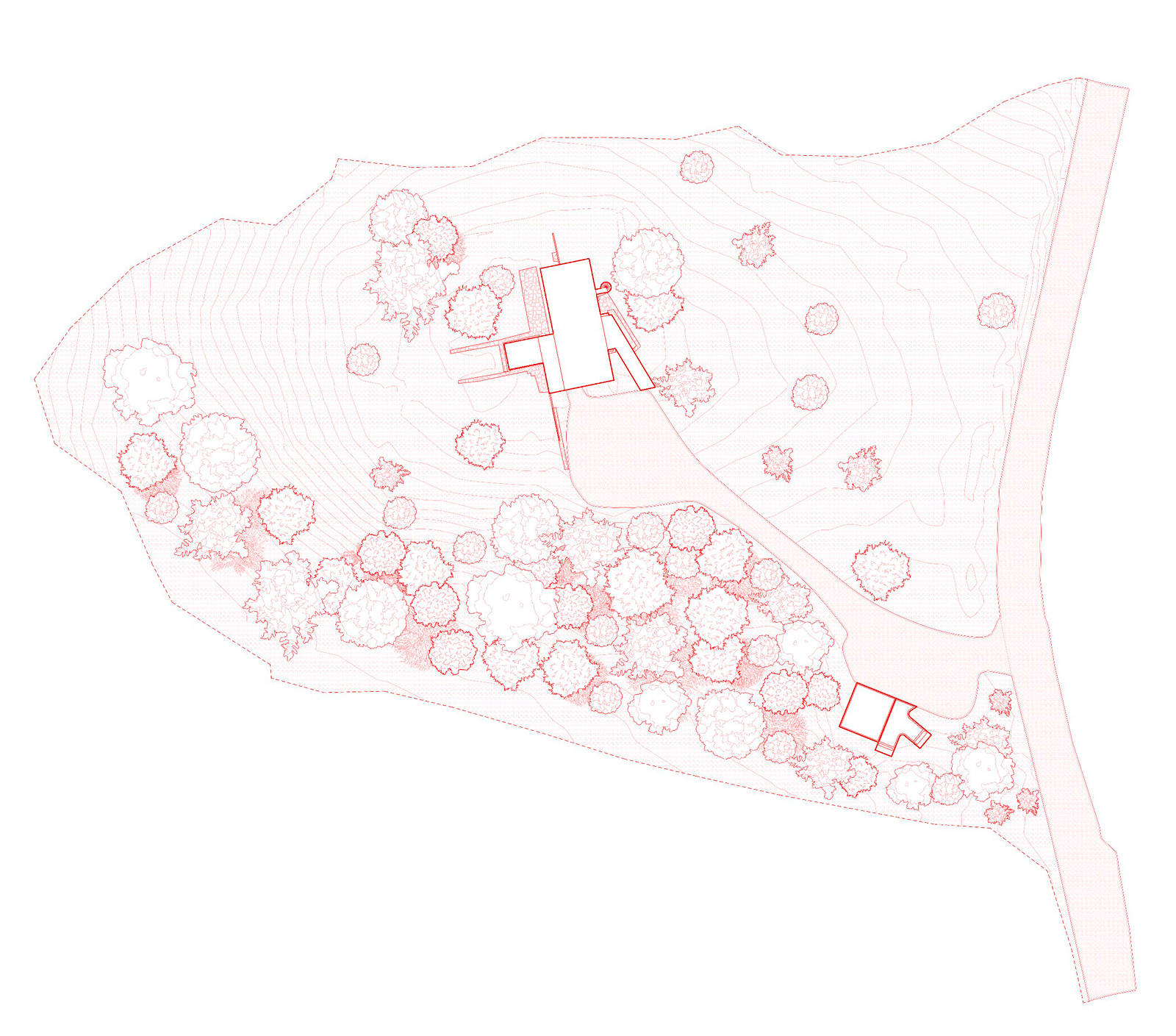
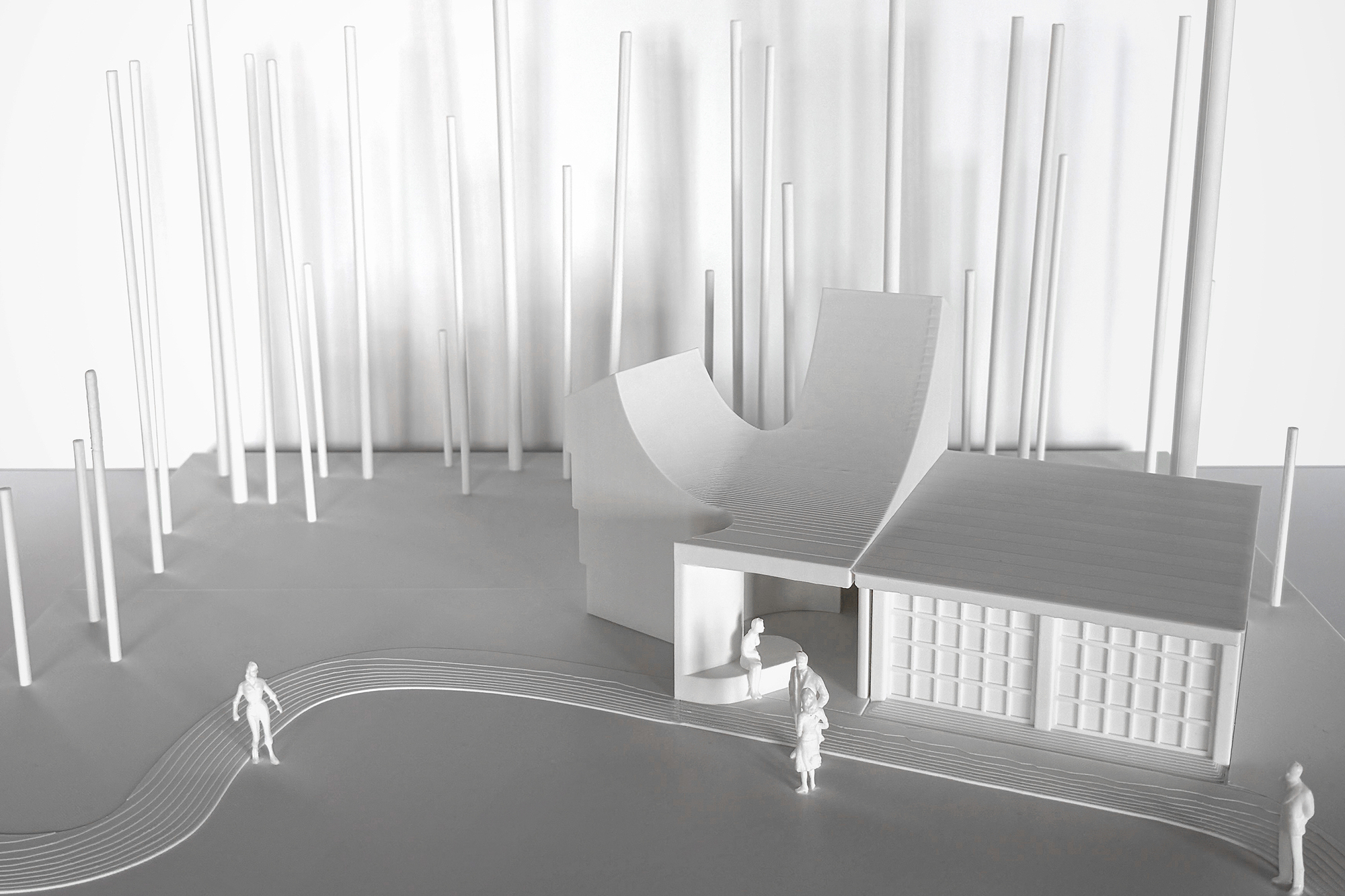
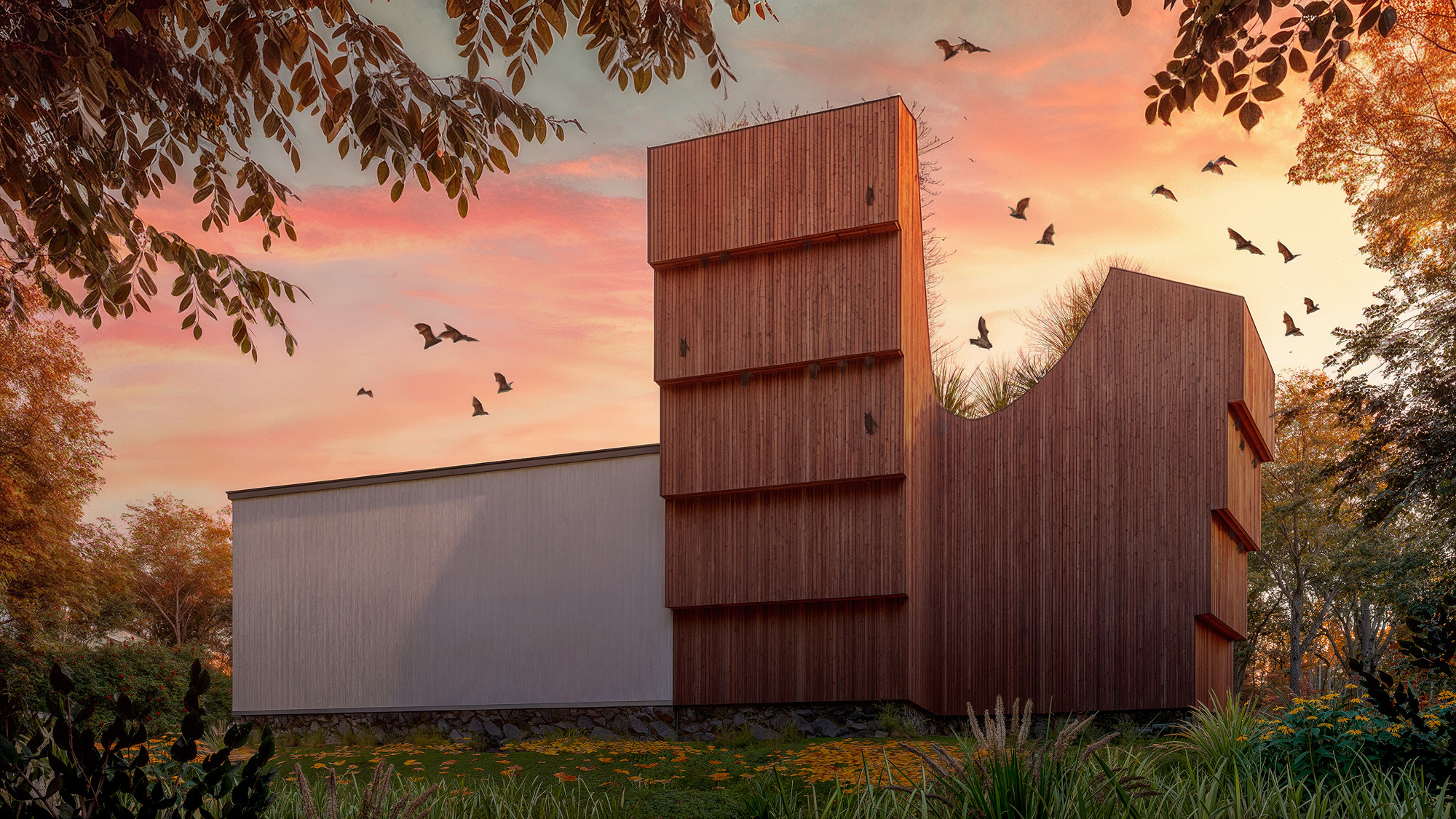
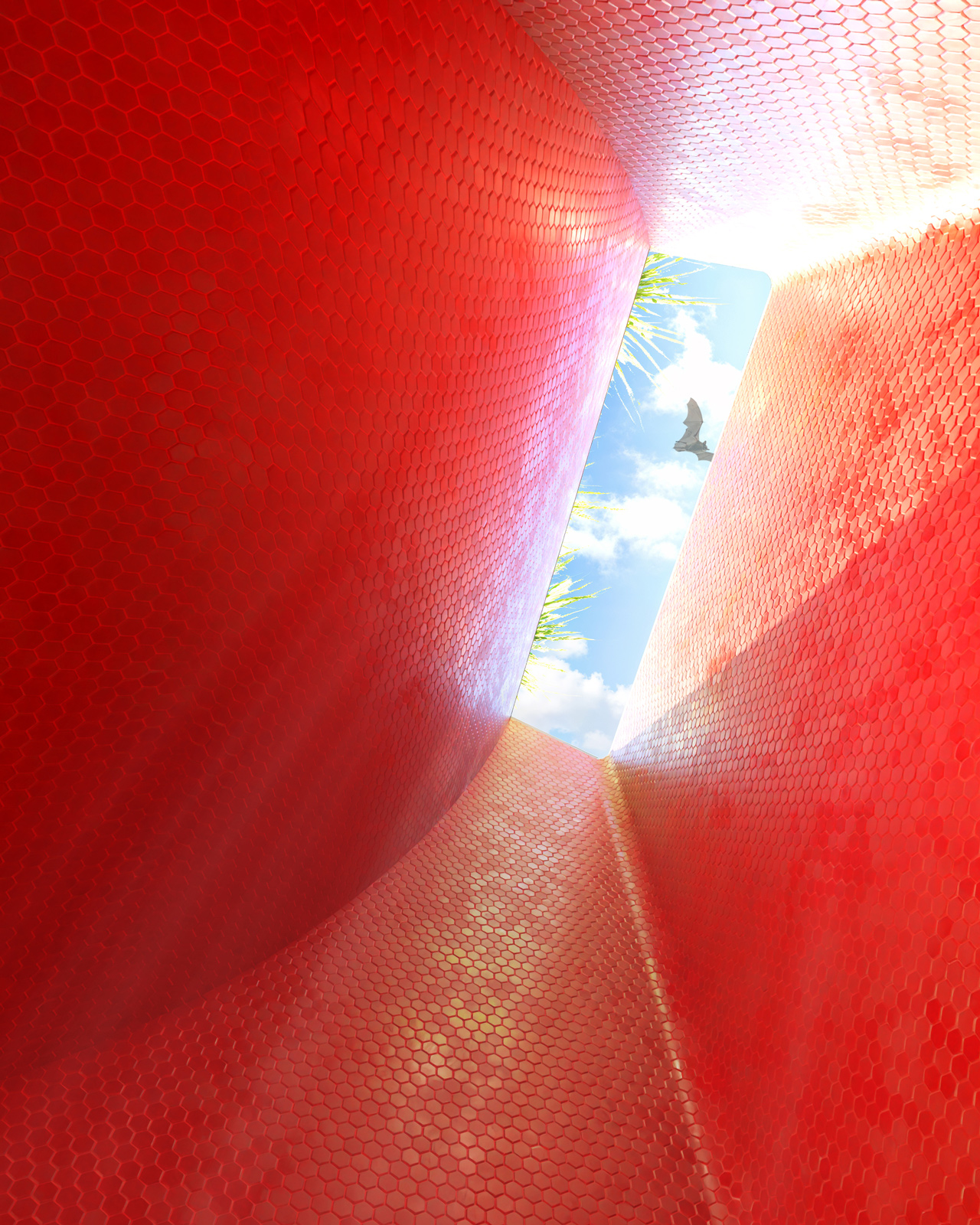
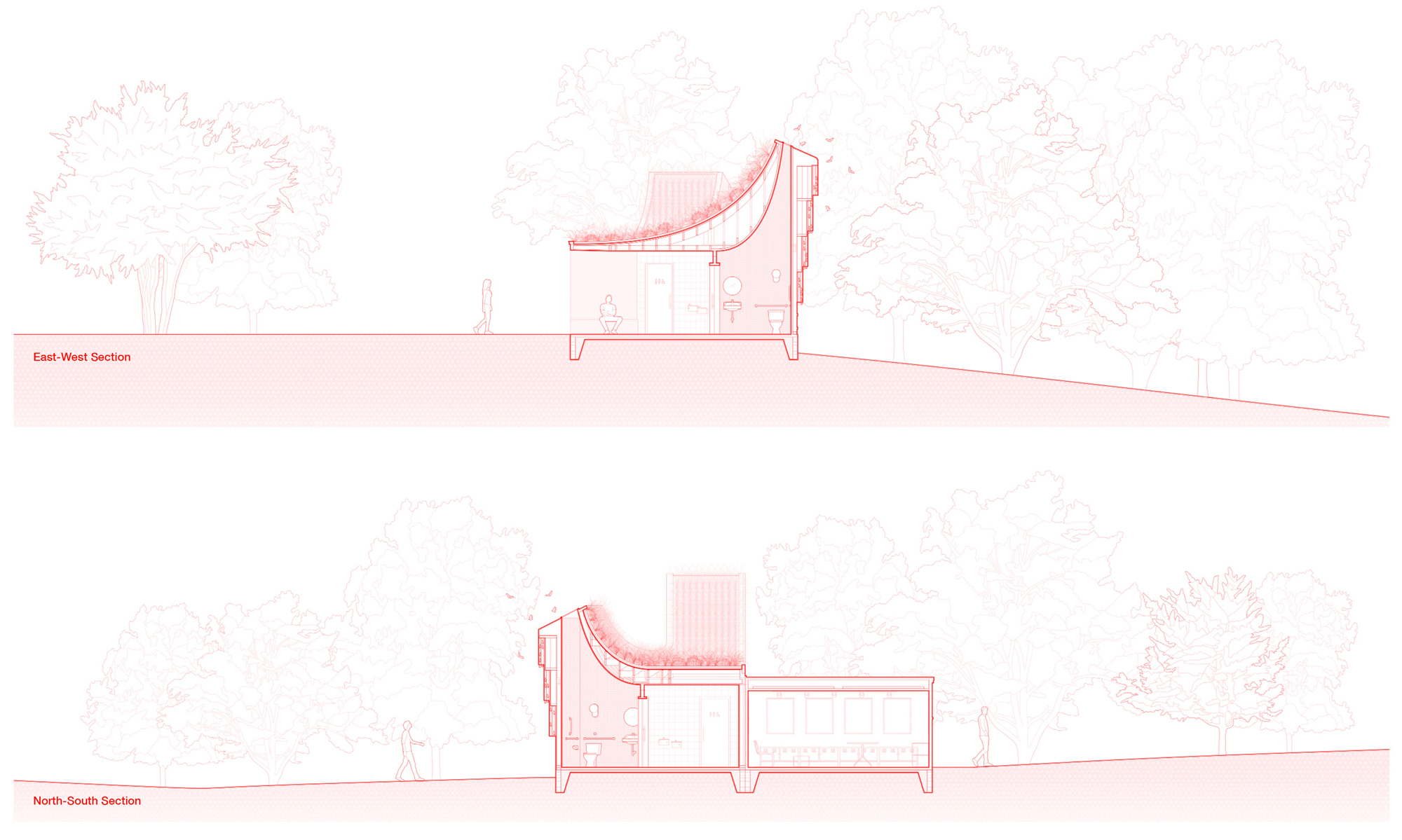
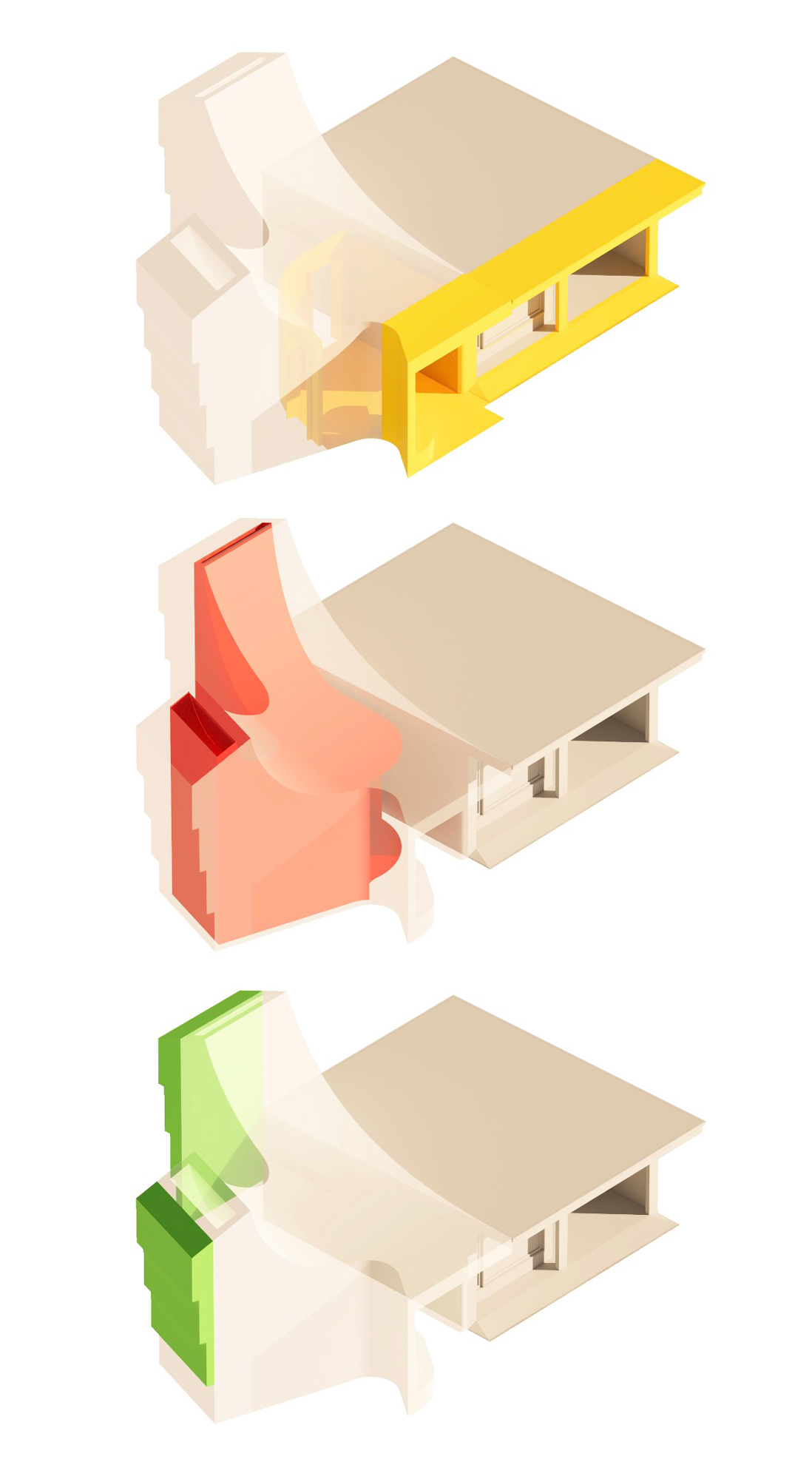
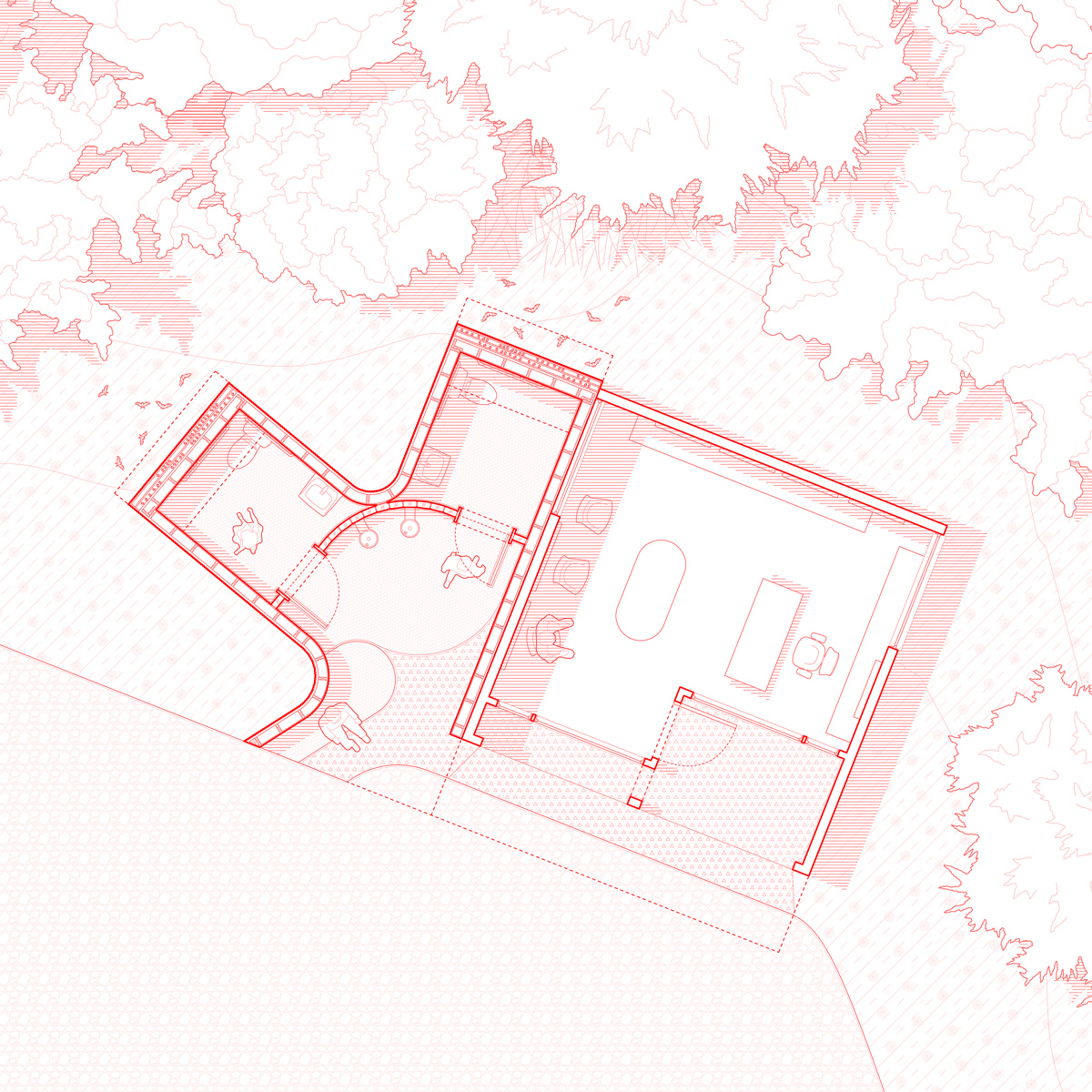
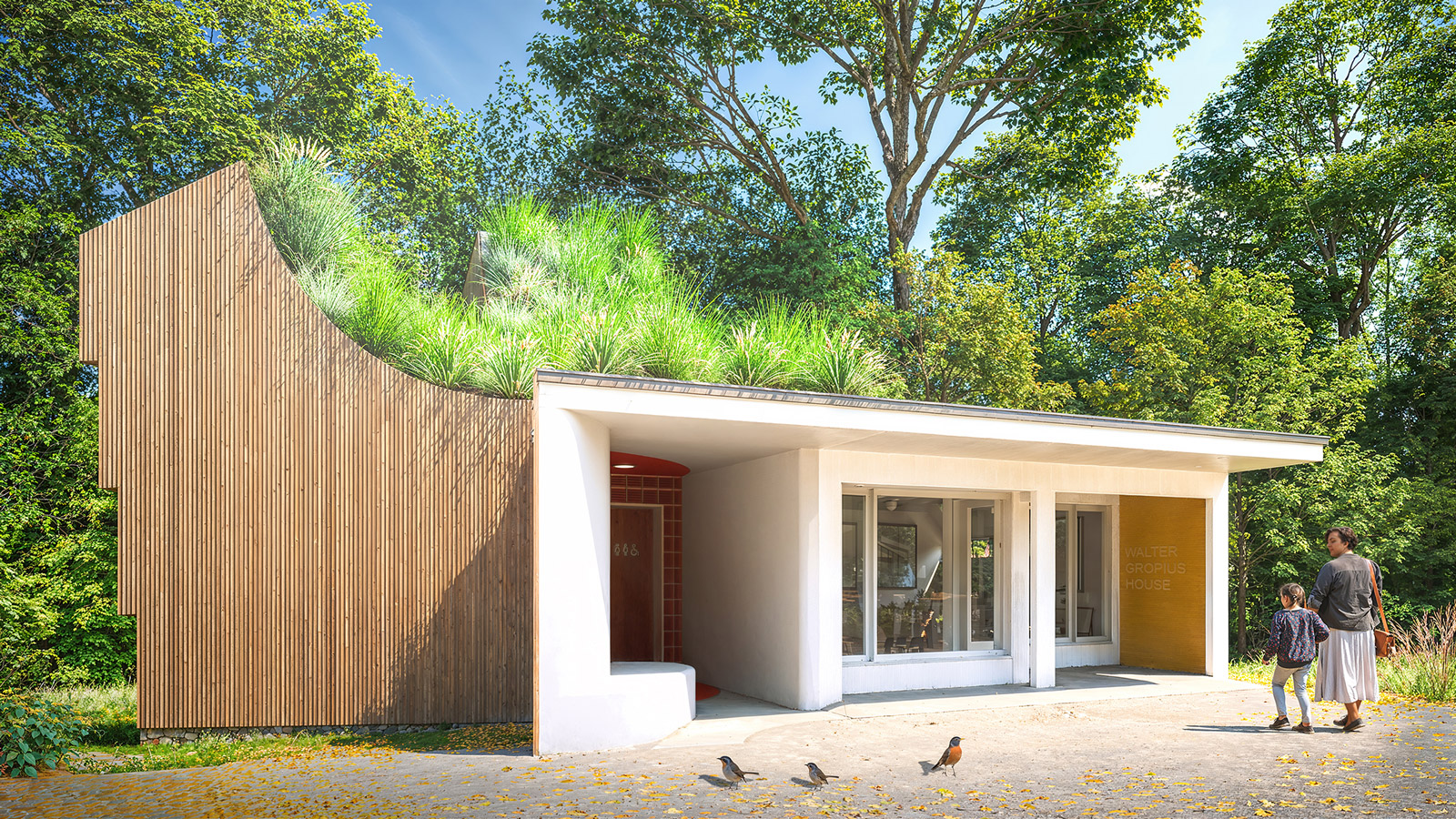
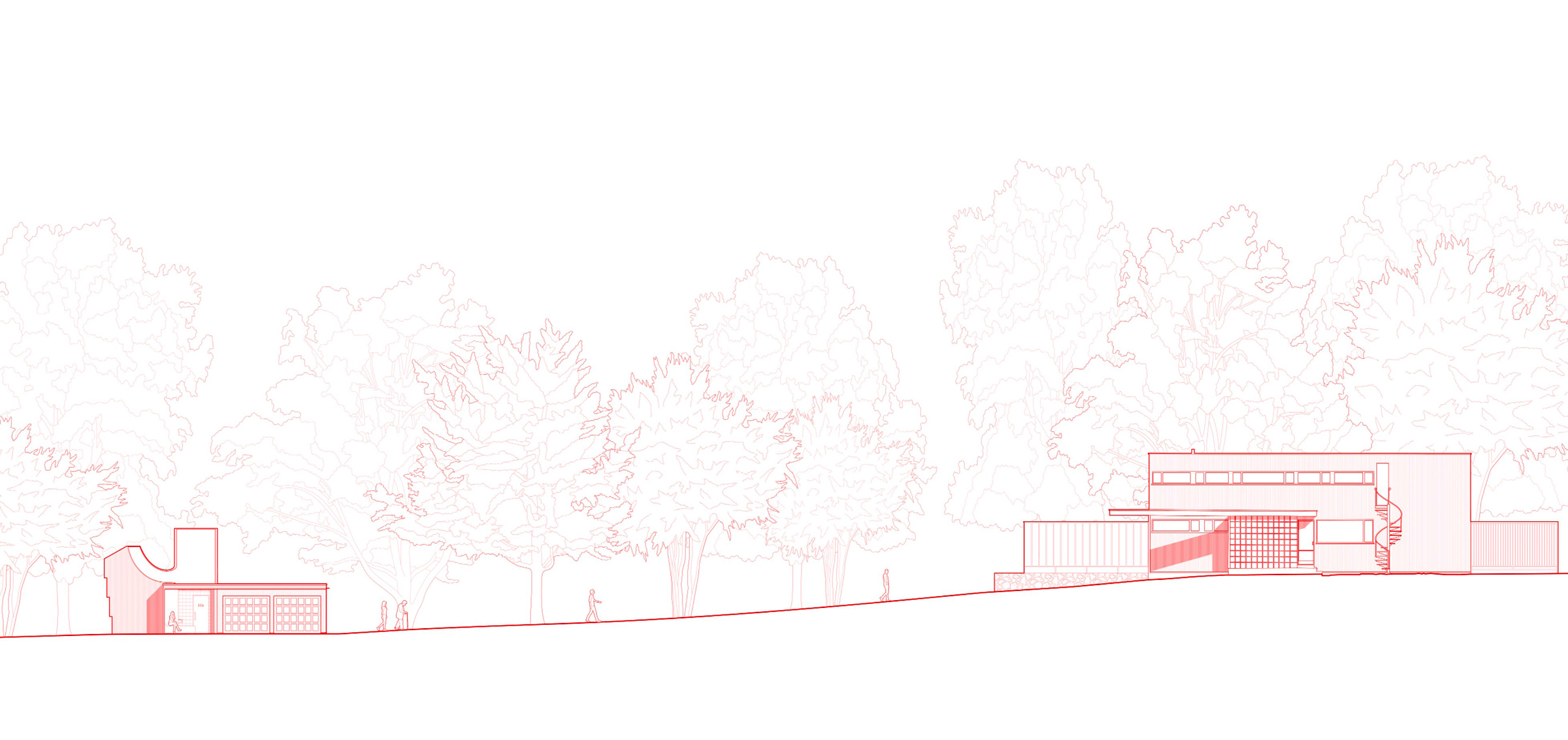
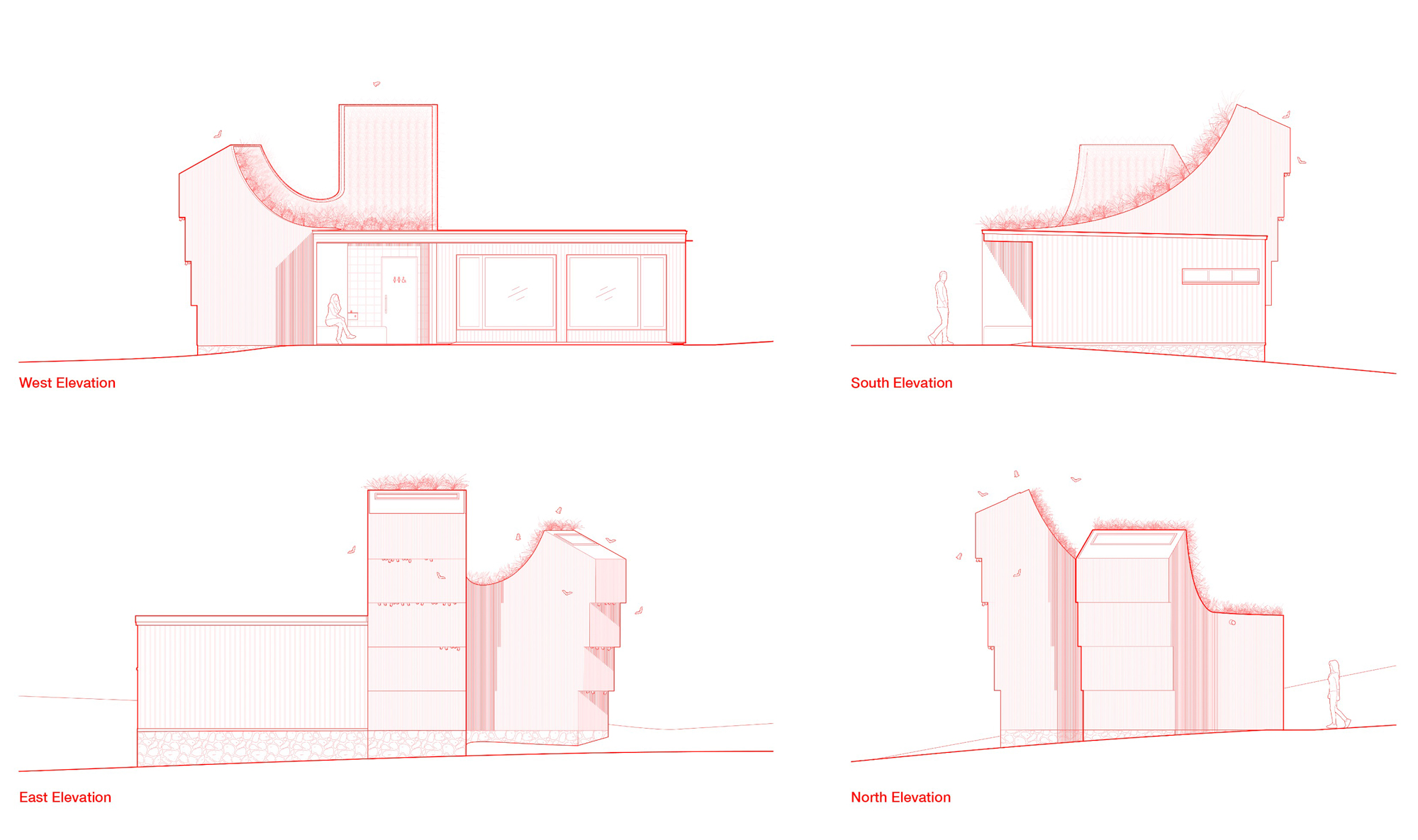
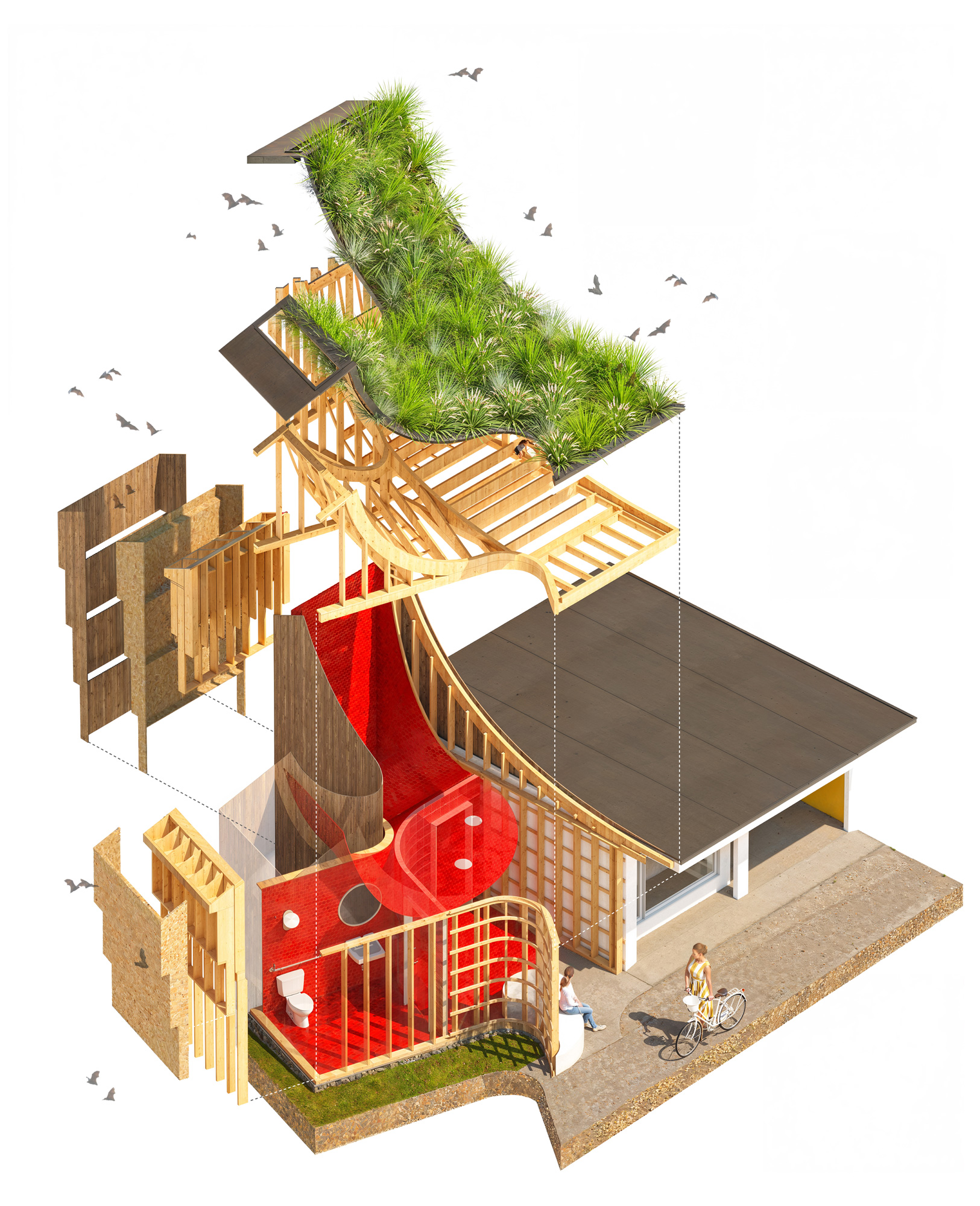
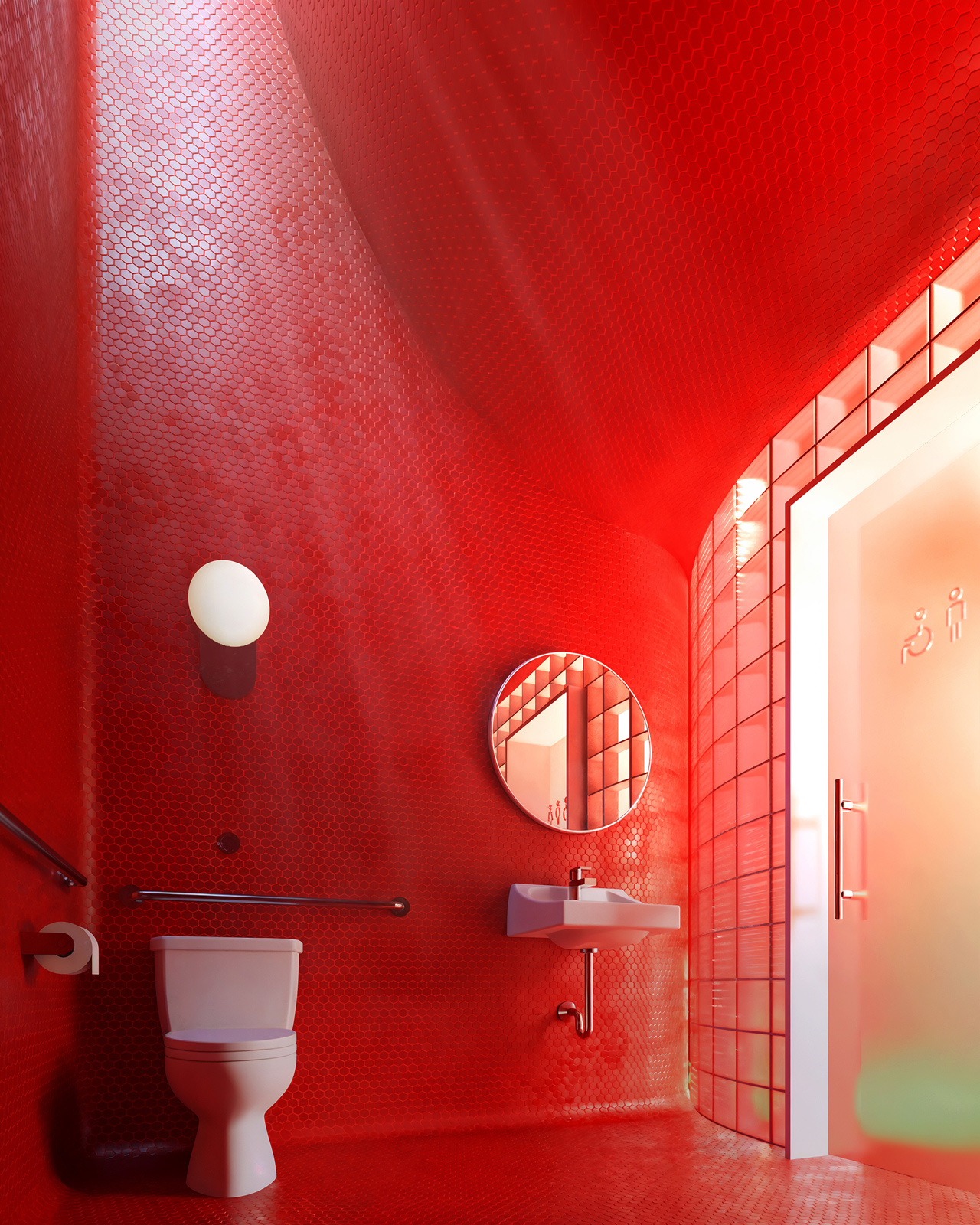
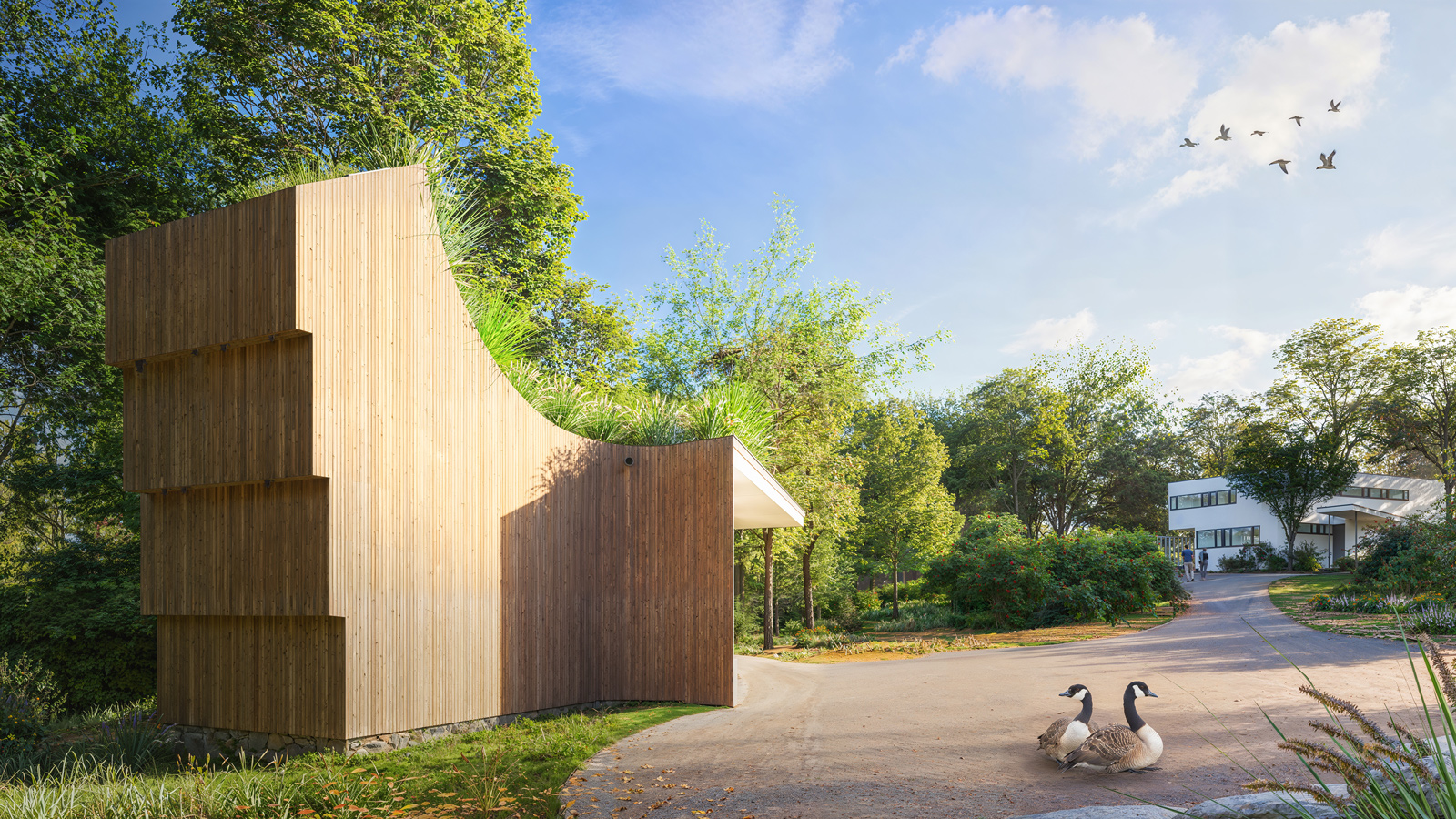
Bathaus is a small hybrid building that expands the visitor center at the Gropius House while simultaneously functioning as an ecologically sensitive bat sanctuary. Integrated directly into the architecture, a series of vertical slot habitats are carved into the east-facing façade, rising between approximately 10 and 20 feet to meet the spatial and thermal requirements of bat habitation. These stepped cavities support the endangered Little Brown Bat (Myotis lucifugus) and are not applied elements, but primary drivers of the building’s form. By allowing ecological performance to shape massing and section, Bathaus extends Bauhaus principles beyond material clarity and functional efficiency toward a more comprehensive vision of architecture that integrates local ecology, environmental systems, and non-human occupants as active design parameters.
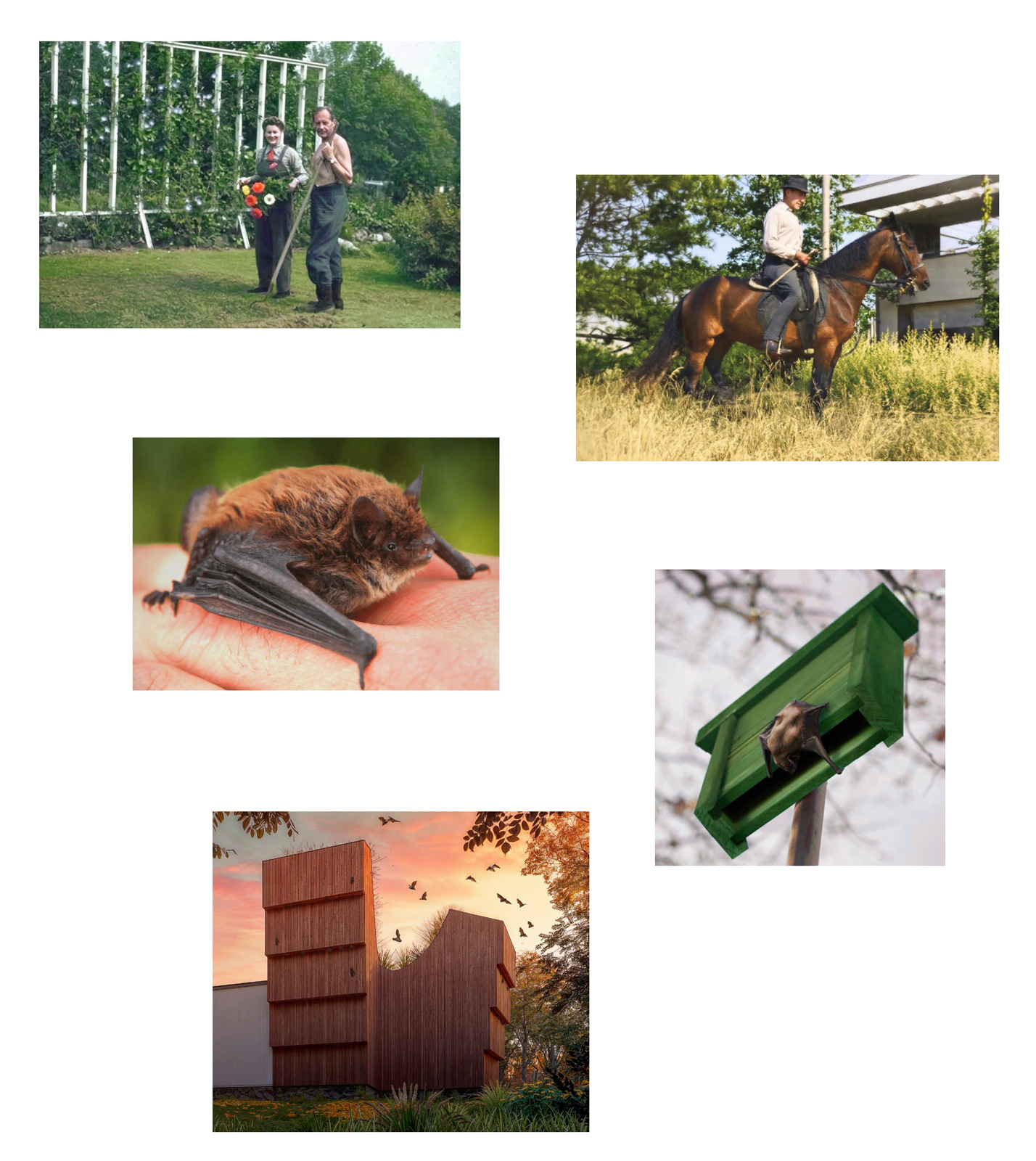
The project responds to the severe population decline of the Little Brown Bat, whose numbers throughout Massachusetts have been dramatically reduced by habitat loss and white-nose syndrome. The forests and wetlands surrounding the Walden Pond State Reservation remain an important regional corridor for bat activity, making the Gropius House site a meaningful location for intervention.1 Historically abundant in this landscape, these bats play a critical role in controlling nocturnal insect populations and maintaining ecological balance. This ecological focus resonates with Walter Gropius’s relationship to the site. Gropius maintained gardens on the property and had a documented affection for animals and outdoor life, often riding horseback through the surrounding land on his horse, Colvin.2 Bathaus continues both legacies through architectural care and environmental stewardship.
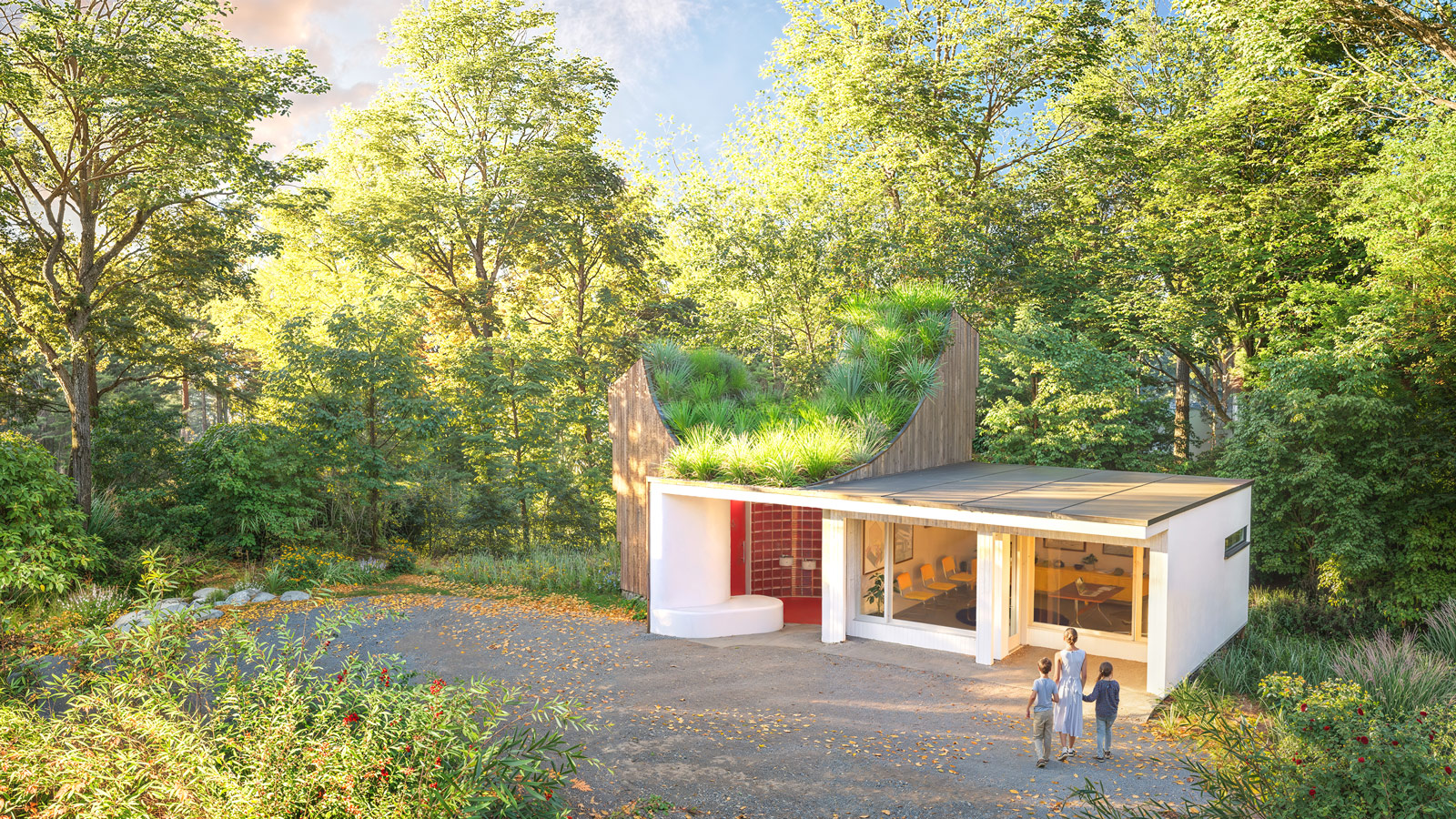
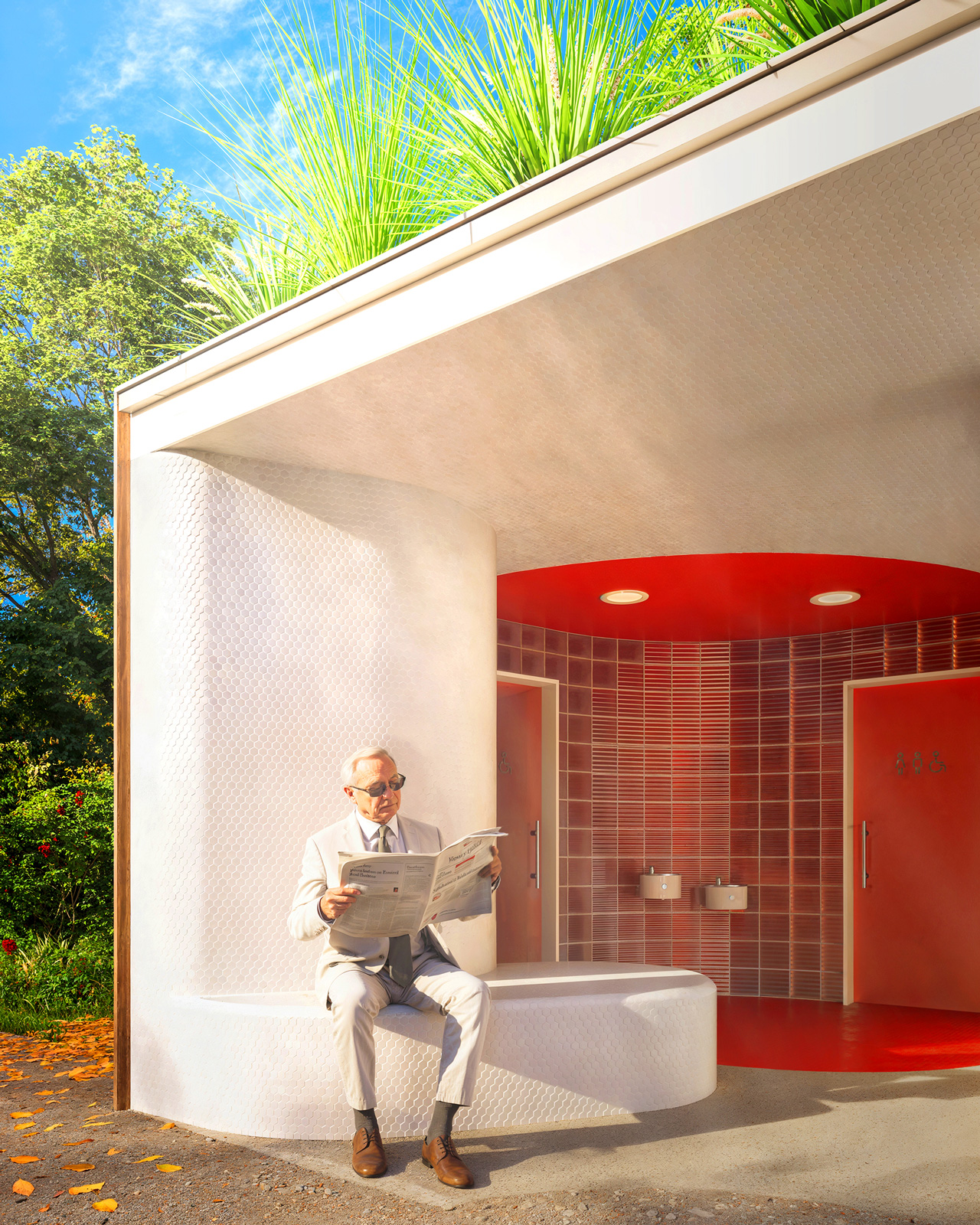
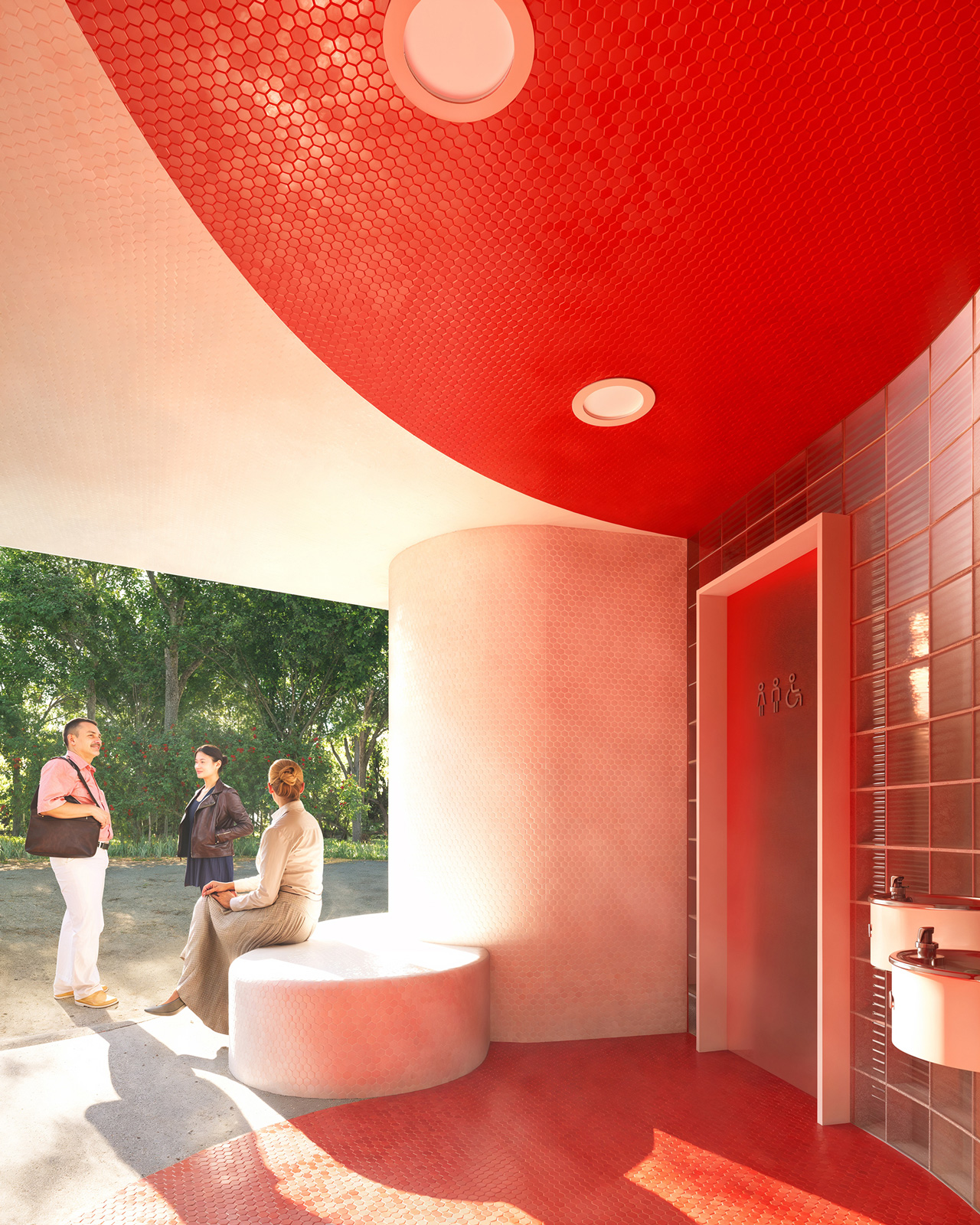
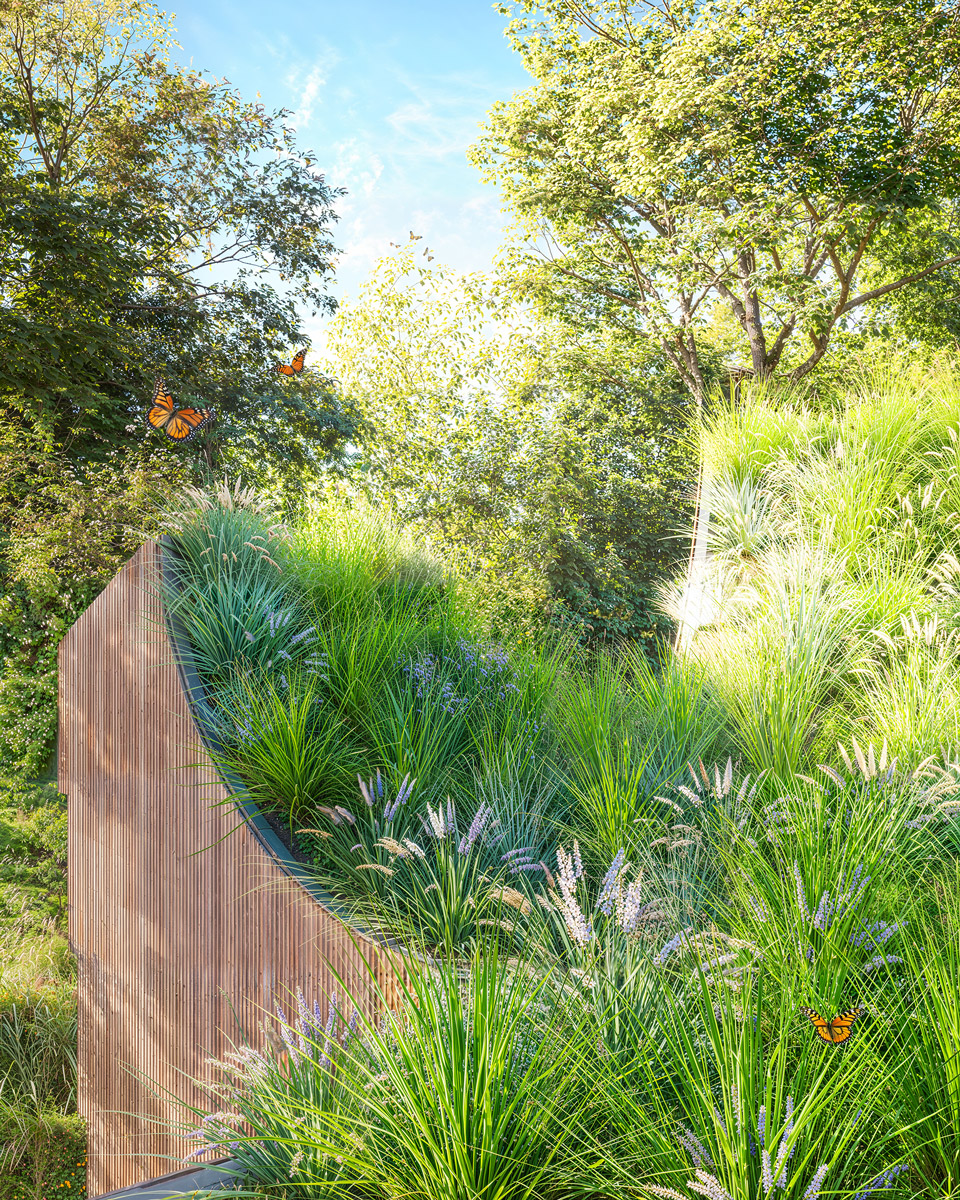
Formally, the building extends the existing façade edge and datum of the garage and visitor center, consolidating a meeting bench, covered gathering space, and two private ADA-accessible bathrooms into a single cohesive volume. Primary formal decisions are guided by the vertical requirements of bat habitation and gradually scaled down to align with the low, horizontal profile of the adjacent historic structures. The building bends outward to welcome visitors, while materials including vertical wood siding, glass block, ceramic tile, concrete, and polished metal reinterpret and modernize those already present at the Gropius House. Ecological performance extends beyond roosting to feeding through a sloped roofscape planted with low-maintenance native species including Little Bluestem (Schizachyrium scoparium) and Prairie Smoke (Geum triflorum), which support nocturnal insects that form a primary food source for bats.
Bathaus proposes that new architecture must perform functionally beyond exclusively human needs. Even small buildings participate in larger environmental systems and can operate as micro-habitats for other species. By embedding ecological performance directly into form rather than treating it as an add-on, the project advances an expanded understanding of Bauhaus principles, one in which functional clarity includes ecological responsibility and architecture is understood as a shared and living system.
PROGRAM: Visitor Bathroom
CONTEXT: Lincoln, Massachusetts, USA
SITE: The Gropius House
TEAM: Bryan Maddock, Grace Infante
ORGANIZER: Historic New England
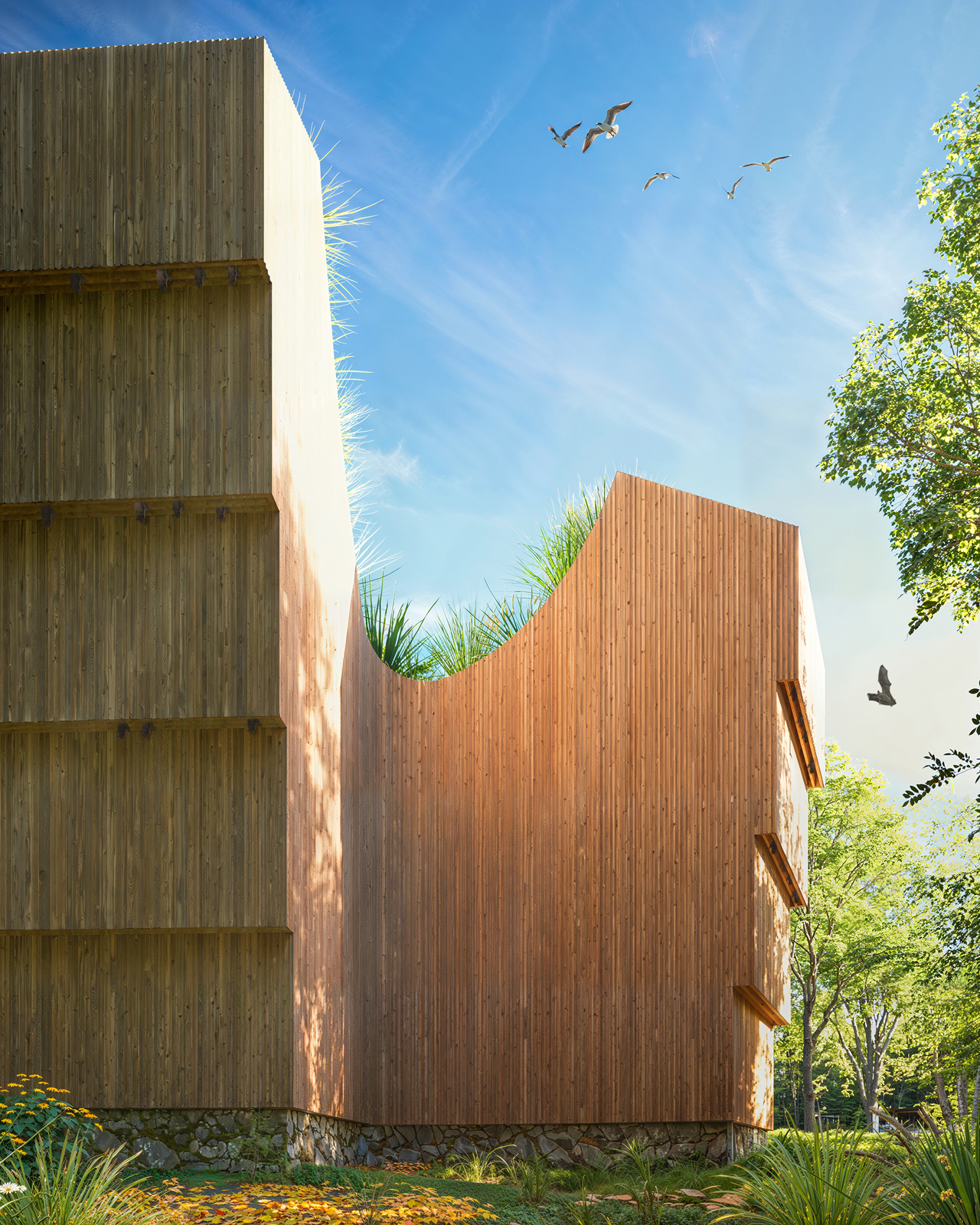
Along the east-facing façade, a series of engineered bat habitats step upward to provide a range of roosting conditions. These vertical slot constructions support and protect the endangered Little Brown Bat (Myotis lucifugus).