ADC3
—
—
Alternative Desert Cities 3
Shieh District Timeline

Alternative Desert Cities 3

Timeline collage from early development to the future transformation of Phoenix's warehouse district by student Brandon ShiehTimeline collage from early development to the future transformation of Phoenix's warehouse district by student Brandon ShiehTimeline collage from early development to the future transformation of Phoenix's warehouse district by student Brandon ShiehTimeline collage from early development to the future transformation of Phoenix's warehouse district by student Brandon Shieh

RELATED RESEARCH IMAGES

RELATED PROJECT IMAGES

OTHER PROJECTS

The Butterfly Theater is a living pavilion—part sculpture, part habitat, part playground. It takes inspiration from the elegance of flamingos and the presence of butterflies in Miami Beach, transforming the park’s open center into a place of movement, color, and quiet spectacle.
The Urban Test Object (UTO) serves as a large-scale intervention that accelerates our relationship with the future city. Rather than solving issues like density, infrastructure, or access, the UTO heightens awareness of the rapid urban transformations shaping our future.
Framework: Inverted Square Pyramid (FW:ISP) reimagines the traditional pyramid by flipping it upside down, shifting its focus from the cosmos to the people. The structure’s apexes become seating points within a flexible, interactive framework that encourages public engagement and play.
Infrastructure as urban performance. Serving as both a backdrop to elegant theatrical dances and a framework for holding a wandering public, the Dance Machine enacts performance through both its program and its existence as a merged urban extension of the Queensboro Bridge.
The RACA project must meet two demands: A. REFLECTION (museum) or B. CONTINUATION (practice + addition). The current program and its stagnancy has left the site forgotten—it is a typical static museum on a living site. The site and addition must constantly change through the participation of people.
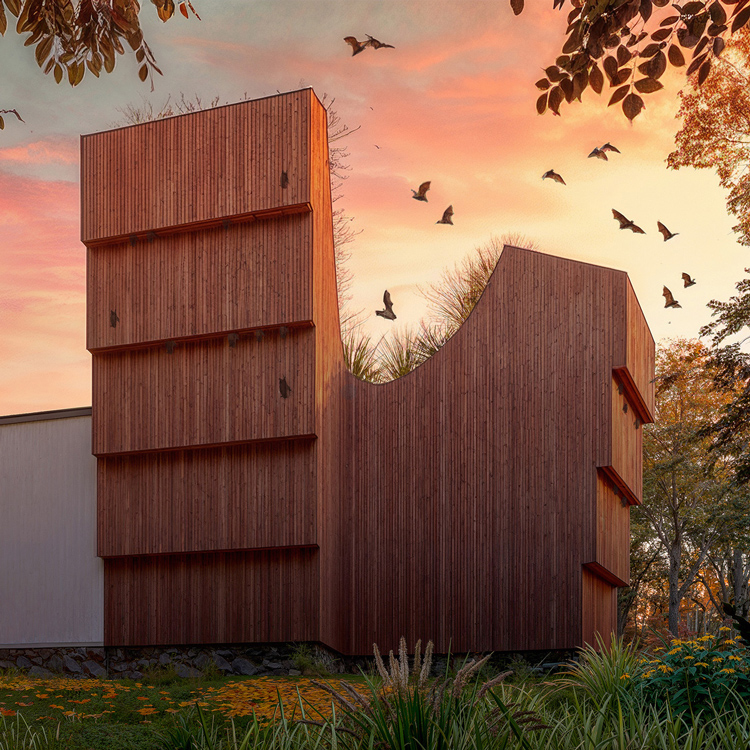
Bathaus is a small hybrid building that expands the visitor center at the Gropius House while simultaneously functioning as an ecologically sensitive bat sanctuary. Integrated directly into the architecture, a series of vertical slot bat habitats are carved into the façade and form.
The GBN project sites itself as this link connecting the busiest night life district and revitalized neighborhood park in the north, the largest beach front in the city to the south, and establishes the cities first large public plaza and recreation fields adjacent to the new building.
QTCT is tasked to blend these two identities onto one site—a give and take relationship between beach ambitions and urban necessities. QTCT is a sampling of two worlds: on one hand it is the embodiment of the language of the beach and on the other it is a detailed and exacting built urban space.

OTHER RESEARCH