ADC2
Alternative Desert Cities 2
Fernandez Model Community

Alternative Desert Cities 2

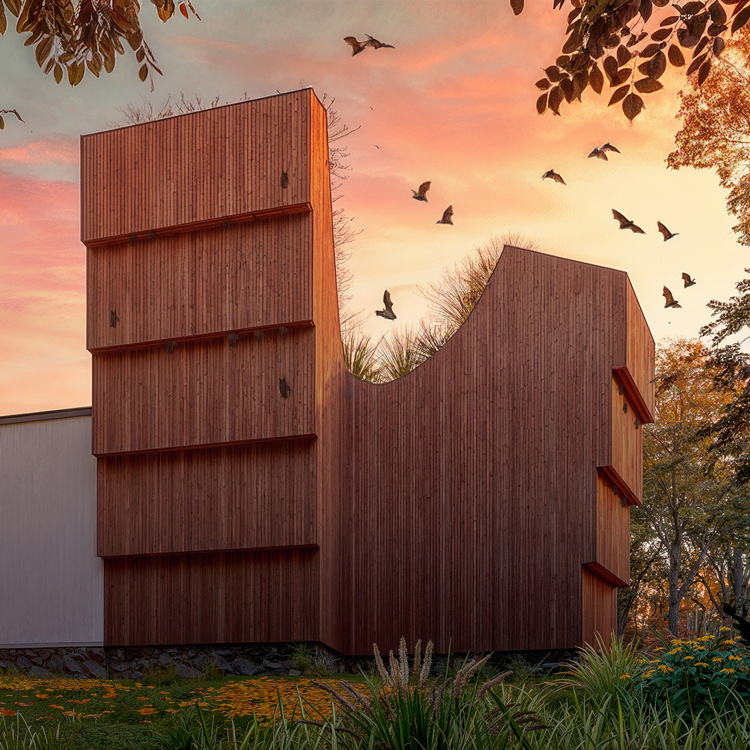
Model showing the spread of secondary backyard units throughout the suburbs of Phoenix by student Christopher FernandezModel showing the spread of secondary backyard units throughout the suburbs of Phoenix by student Christopher FernandezModel showing the spread of secondary backyard units throughout the suburbs of Phoenix by student Christopher FernandezModel showing the spread of secondary backyard units throughout the suburbs of Phoenix by student Christopher Fernandez

RELATED RESEARCH IMAGES

RELATED PROJECT IMAGES

OTHER PROJECTS

The GBN project sites itself as this link connecting the busiest night life district and revitalized neighborhood park in the north, the largest beach front in the city to the south, and establishes the cities first large public plaza and recreation fields adjacent to the new building.
In Tempe there are two pedestrian axes: Mill Avenue and Palm Walk. Mill Avenue is successful and Palm Walk is not. Is there a way to make the palm trees useful to the students? The PEP structure is powered by buried hydraulic pressure systems giving vertical movement to the layer/palm interface.
The Miami Beach House is constructed as a series of platformed spaces that continuously step upward within a tropically climatized shell. Continuing the structural experiments of the Metabolist movement, thirteen modular concrete platforms branch from two vertical cores.
Utilizing built form as a strategic carrier of culture in opposition of the status quo, the Hellinikon project links the disconnected suburban mountain communities to the east with the sea to the west while splitting the Hellinikon International Airport and Olympic Park into distinct zones.
Dimensions.com is an ongoing reference database of dimensioned drawings documenting the standard measurements and sizes of the everyday objects and spaces that make up our world.
Expanding the mission of the local Biscayne National Park Institute, MICROGROVE is a living research community designed for scientists, ecologists, researchers, and eco-tourists, dedicated to the study, restoration, and increased social awareness of coastal ecosystems.
Space has become redundant again. Popular culture is uninterested in the goings-on in space. Once achieved, mans absurd relation with space becomes yesterdays news. To become relevant to the public, CASIS must be an amenity and not a mission. Instead of promoting an HQ, make it a public interface.
The RACA project must meet two demands: A. REFLECTION (museum) or B. CONTINUATION (practice + addition). The current program and its stagnancy has left the site forgotten—it is a typical static museum on a living site. The site and addition must constantly change through the participation of people.

OTHER RESEARCH