HK
Hong Kong
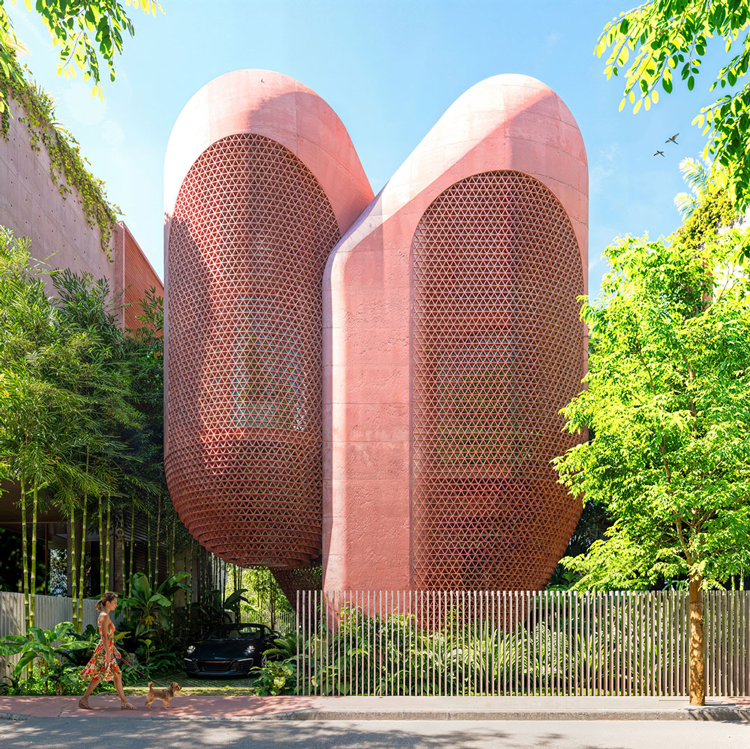
Skinny Pink Tower

Hong Kong

Skinny pink tower paired with blue and yellow buildings in Hong KongSkinny pink tower paired with blue and yellow buildings in Hong KongSkinny pink tower paired with blue and yellow buildings in Hong KongSkinny pink tower paired with blue and yellow buildings in Hong Kong

RELATED RESEARCH IMAGES
RELATED PROJECT IMAGES

OTHER PROJECTS

Seating design is vital in fostering communal interactions in shared spaces. Rooted in the organic growth principles of the Metabolist movement and the transformational geometric language of digital Metaballs, Meta-Bench forms an experiential seating system which individuals can move and adjust.
The YELE music studio competition, underway before the earthquake, must respond now, but plan for the future of the community. Music is relief in a time of tragedy. The goal is to meet the most basic survival needs now while leaving spaces for future growth through self sustaining phases.
The CART live/work housing prototype adds a vertical profile to downtown while converting an underutilized public path into an urban gesture by introducing of a specialized food cart zone in New Haven. The CART residents would rent and appropriate the moving space as a means of expanding their zone.
In Tempe there are two pedestrian axes: Mill Avenue and Palm Walk. Mill Avenue is successful and Palm Walk is not. Is there a way to make the palm trees useful to the students? The PEP structure is powered by buried hydraulic pressure systems giving vertical movement to the layer/palm interface.
Seeing Park Avenue as an underutilized zone that connects four vibrant neighborhoods from 42nd Street to 144th Street, Infrastructural Infill is a study testing the potential to locate a combination of mixed-use housing and transportation in the residual spaces caused by urban infrastructure.
The Craft School is a participatory design and construction initiative that places students at the center of creating their own learning environment. It recognizes that education is not only about what happens inside the classroom, but also how the classroom comes to be.
The RACA project must meet two demands: A. REFLECTION (museum) or B. CONTINUATION (practice + addition). The current program and its stagnancy has left the site forgotten—it is a typical static museum on a living site. The site and addition must constantly change through the participation of people.
Planes, frames, and volumes are fundamentals to all assembly logics. With the proliferation of additive production methods, the possibility of volumetric prefabricated components has the potential to radically alter the way that we conceive of construction and the permanence of building parts.

OTHER RESEARCH