ADC3
—
—
Alternative Desert Cities 3
Ibarra Section Axon

Alternative Desert Cities 3

Section axonometric drawing of a corner mass showing the internal canyon space and outer housing by student Marcia IbarraSection axonometric drawing of a corner mass showing the internal canyon space and outer housing by student Marcia IbarraSection axonometric drawing of a corner mass showing the internal canyon space and outer housing by student Marcia IbarraSection axonometric drawing of a corner mass showing the internal canyon space and outer housing by student Marcia Ibarra

RELATED RESEARCH IMAGES

RELATED PROJECT IMAGES

OTHER PROJECTS

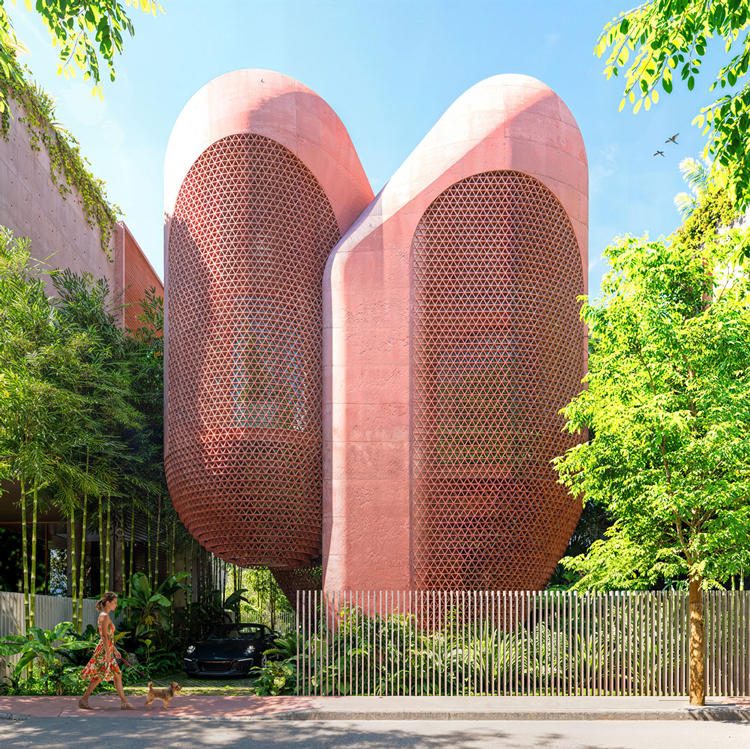
The Miami Beach House is constructed as a series of platformed spaces that continuously step upward within a tropically climatized shell. Continuing the structural experiments of the Metabolist movement, thirteen modular concrete platforms branch from two vertical cores.
QTCT is tasked to blend these two identities onto one site—a give and take relationship between beach ambitions and urban necessities. QTCT is a sampling of two worlds: on one hand it is the embodiment of the language of the beach and on the other it is a detailed and exacting built urban space.
Scaffolding is often seen as a temporary urban necessity—functional, but rarely celebrated. This project reimagines scaffolding as an architectural intervention and public art piece throughout Española Way, transforming it into a vibrant, interactive element in Miami Beach’s urban fabric.
Framework: Inverted Square Pyramid (FW:ISP) reimagines the traditional pyramid by flipping it upside down, shifting its focus from the cosmos to the people. The structure’s apexes become seating points within a flexible, interactive framework that encourages public engagement and play.
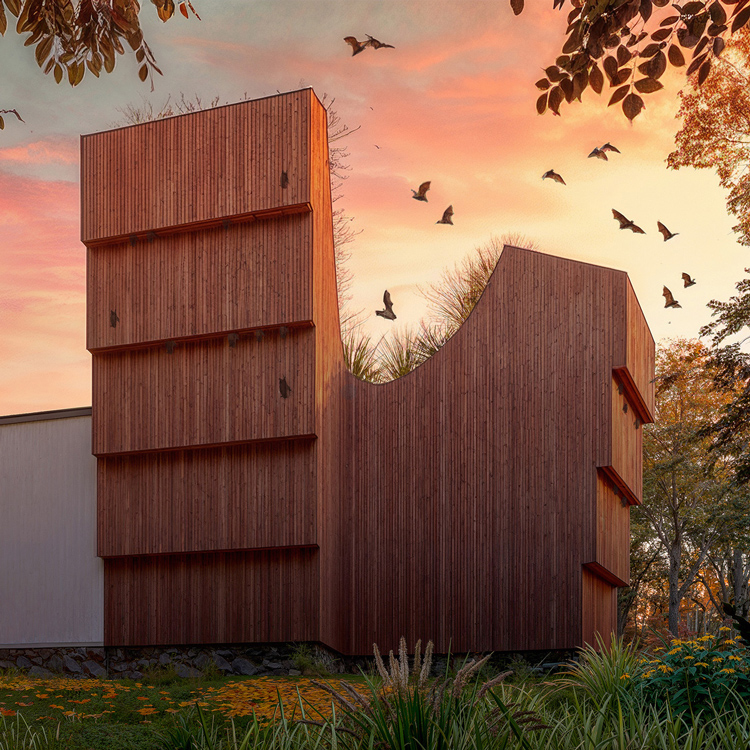
Bathaus is a small hybrid building that expands the visitor center at the Gropius House while simultaneously functioning as an ecologically sensitive bat sanctuary. Integrated directly into the architecture, a series of vertical slot bat habitats are carved into the façade and form.
Seating design is vital in fostering communal interactions in shared spaces. Rooted in the organic growth principles of the Metabolist movement and the transformational geometric language of digital Metaballs, Meta-Bench forms an experiential seating system which individuals can move and adjust.
Dimensions.com is an ongoing reference database of dimensioned drawings documenting the standard measurements and sizes of the everyday objects and spaces that make up our world.
The RACA project must meet two demands: A. REFLECTION (museum) or B. CONTINUATION (practice + addition). The current program and its stagnancy has left the site forgotten—it is a typical static museum on a living site. The site and addition must constantly change through the participation of people.

OTHER RESEARCH